The Peace Convoy: A Saga of Nomads and the State
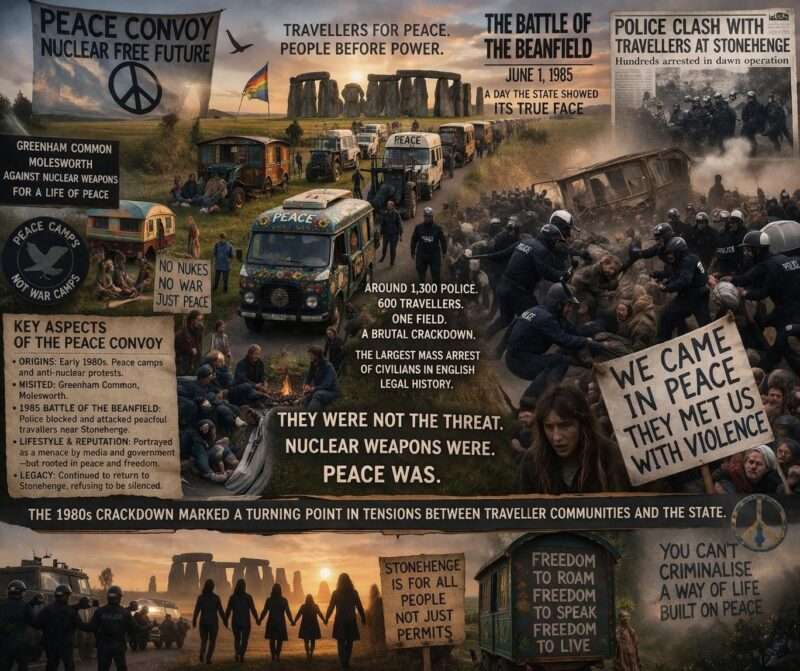
The Nomadic Dream
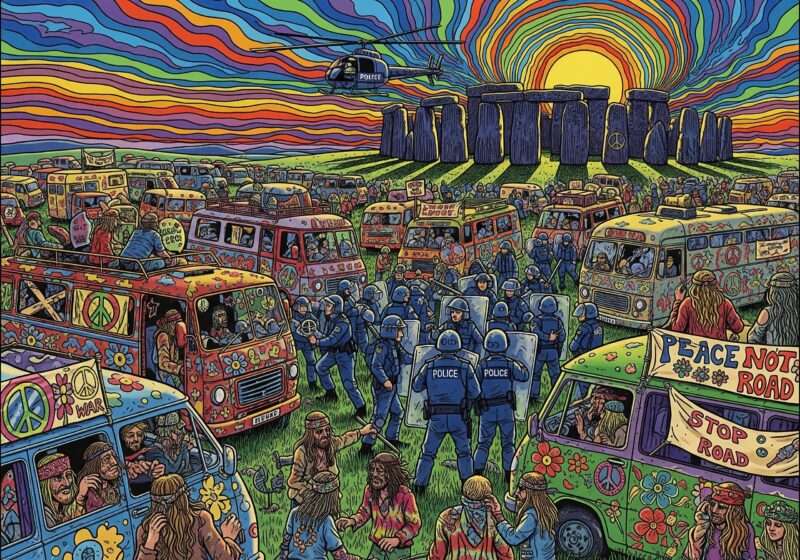
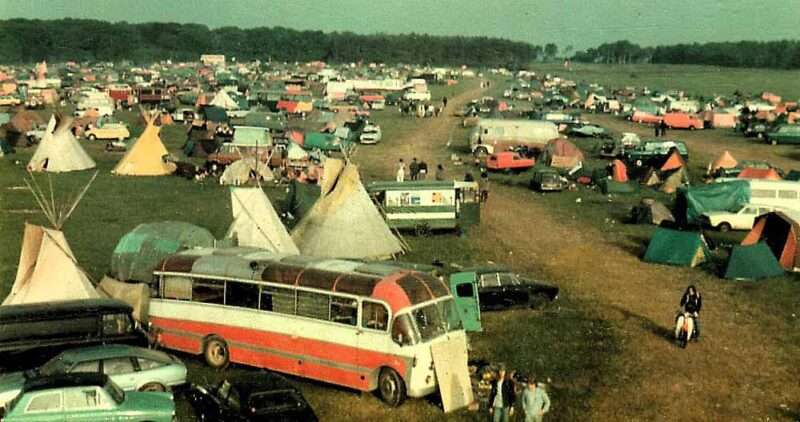
In the early 1980s, a unique movement blossomed across the British landscape. The Peace Convoy was not merely a group of travelers; it was a mobile manifesto of peace, environmentalism, and alternative living. Comprising hundreds of individuals living in colorfully painted, repurposed buses and vans, they traveled from site to site, following the rhythms of the seasons and the calls of political protest. They were fixtures at the Greenham Common Women’s Peace Camp and Molesworth, standing in defiant opposition to the placement of nuclear missiles on British soil.
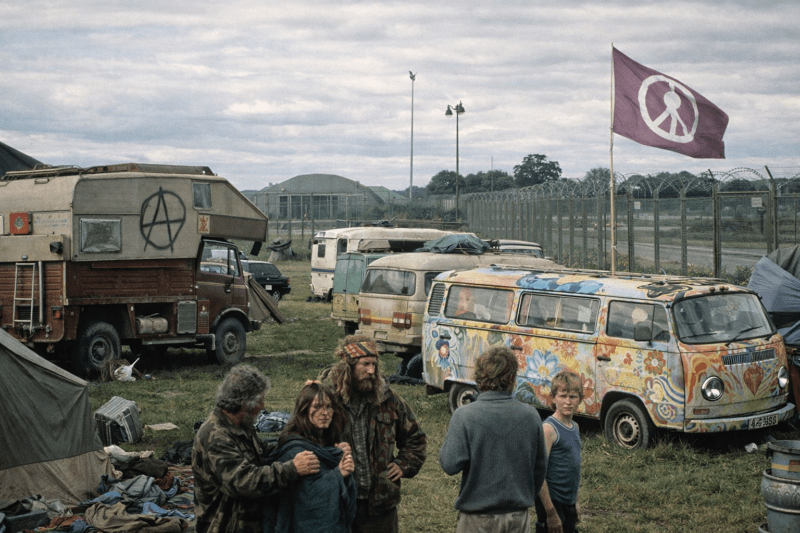
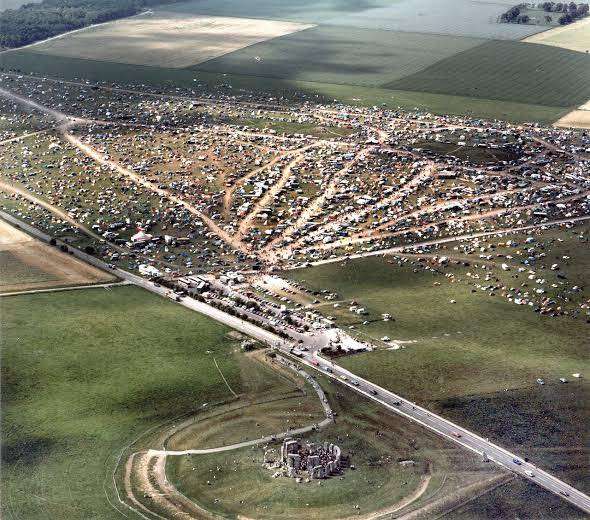
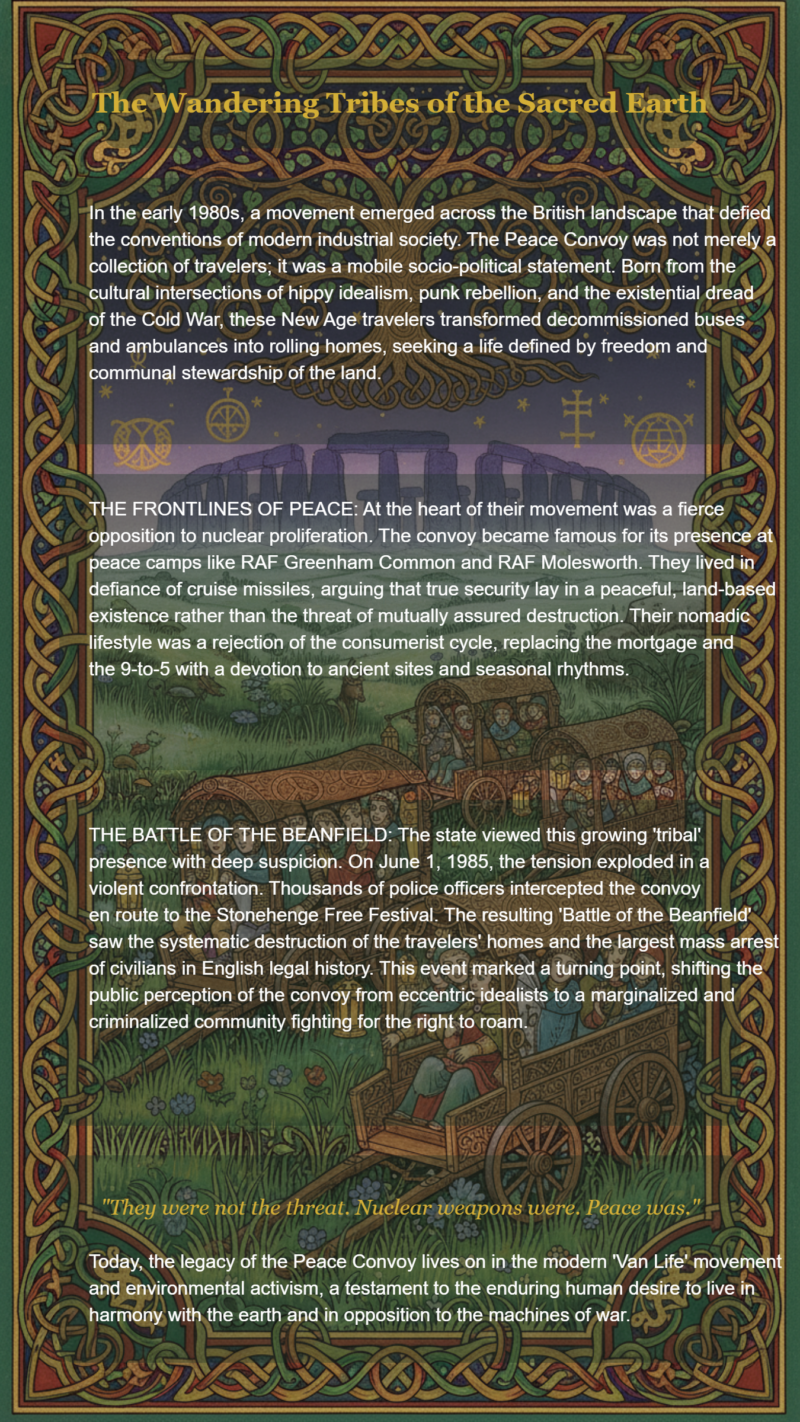
The convoy itself evolved out of the annual migration of “New Age travellers” departing from gatherings such as the Stonehenge Free Festival. By 1982, this seasonal movement had taken on a distinctly political orientation, as segments of the convoy redirected toward strategic protest locations, most notably the US airbase at Greenham Common. This shift marked a transition from cultural festival circuits into direct-action anti-nuclear resistance, embedding the convoy within the infrastructure of the broader peace movement.
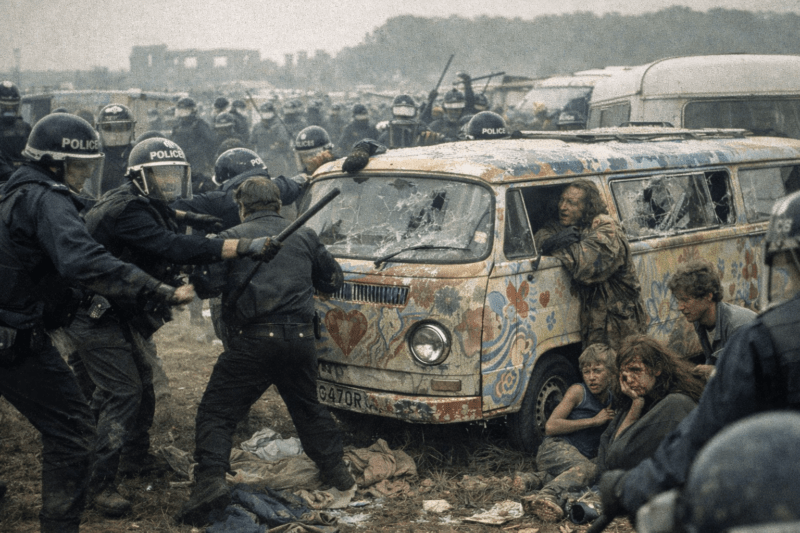
The Battle of the Beanfield (1985)
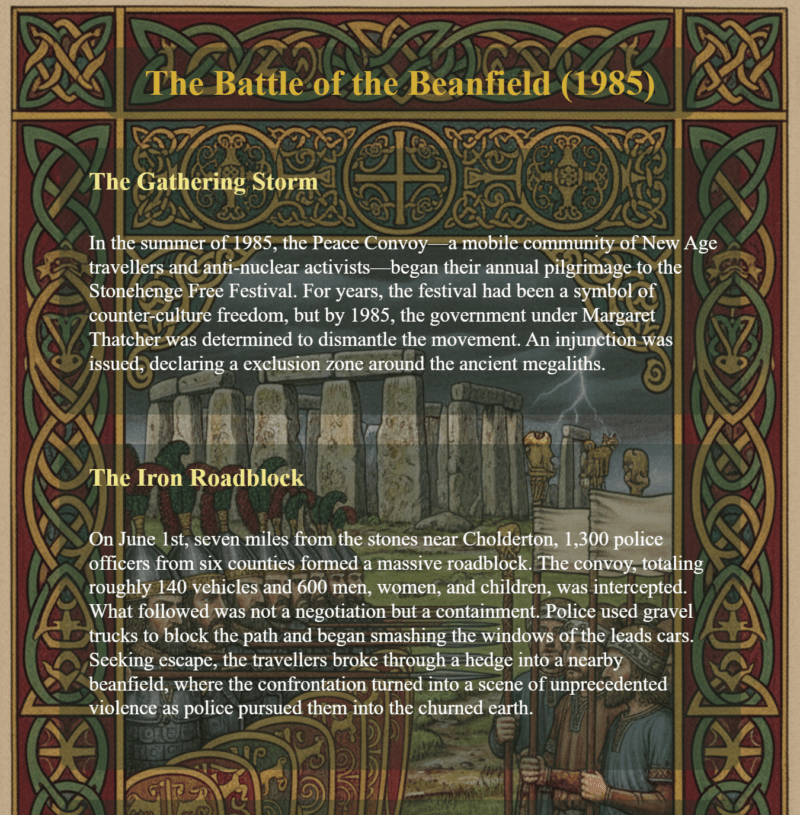
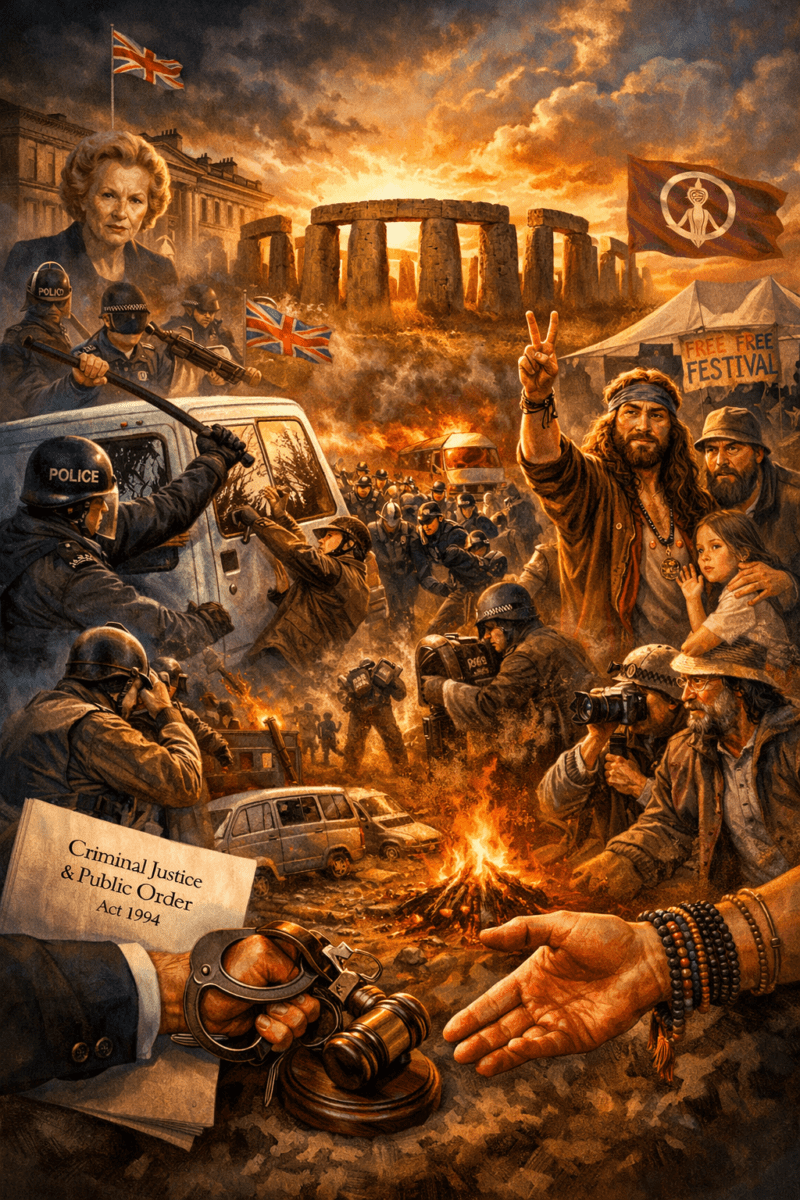
The defining and most tragic moment in the convoy’s history occurred on June 1, 1985. As the convoy attempted to travel to the Stonehenge Free Festival, they were met with an unprecedented show of force. Near the ancient stones, 1,300 Wiltshire police officers blocked their path. What was intended as a peaceful pilgrimage turned into a nightmare of state-sanctioned violence. In a field near the roadside, police systematically smashed the windows of the travelers’ homes, assaulted men and women, and even children.
This event resulted in 537 arrests, the largest mass arrest of civilians in English legal history. The sheer brutality of the police action, much of it captured on film, left a permanent scar on the British collective consciousness.
Media Warfare and Legislation
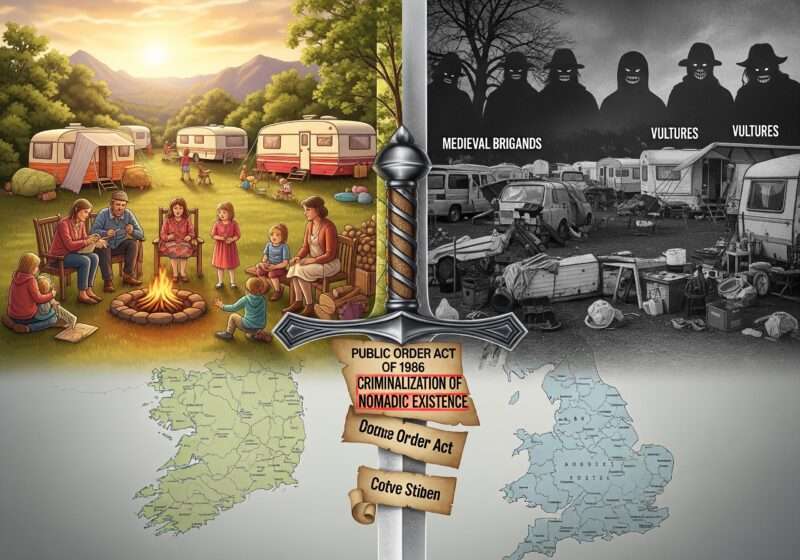
The travelers were often victims of a double-edged sword. While they saw themselves as a peaceful, self-sustaining community, the Thatcher government and mainstream media portrayed them as a threat to the social order. They were labeled ‘medieval brigands’ and ‘vultures.’
This rhetoric paved the way for the Public Order Act of 1986, which granted the police vast new powers to break up gatherings and criminalize the very act of a nomadic existence.
Legacy of the Convoy
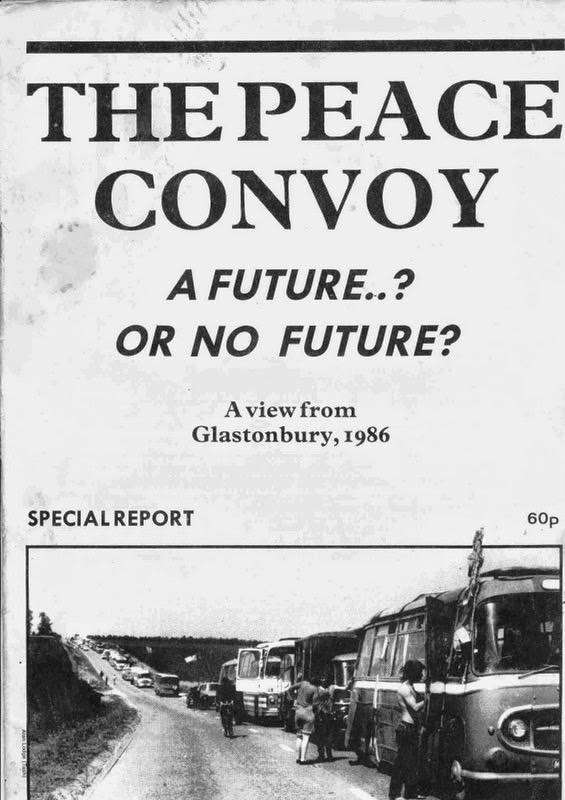
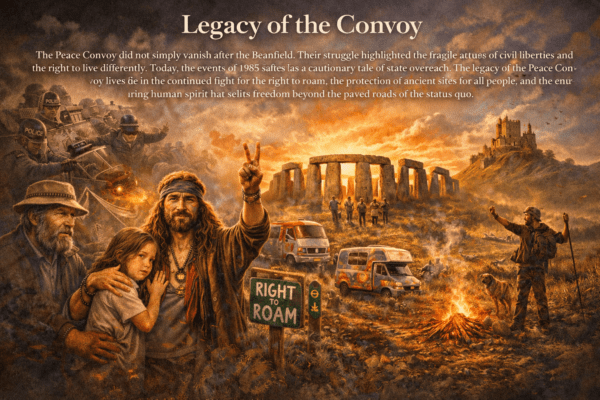
The Peace Convoy did not simply vanish after the Beanfield. Their struggle highlighted the fragile nature of civil liberties and the right to live differently. Today, the events of 1985 serve as a cautionary tale of state overreach.
The legacy of the Peace Convoy lives on in the continued fight, for the right to roam, the protection of ancient sites for all people, and the enduring human spirit that seeks freedom beyond the paved roads of the status quo.