In the annals of classic rock history, certain tracks transcend their initial commercial reception to become enduring anthems of a generation. Among these is “30 Days in the Hole,” a quintessential hard rock and blues-rock masterpiece by the English rock band Humble Pie. Recorded in February of 1972 at the renowned Olympic Studios in London, the track was released in September of that year as a single for the group’s fifth studio album, Smokin’. Behind the driving rhythm and electrifying guitar riffs lies a comprehensive tale composed by the band’s frontman, lead vocalist, and guitarist, Steve Marriott. While it may masquerade as a standard, raucous rock-and-roll stomper, “30 Days in the Hole” is, in fact, a deeply narrative composition that serves as a gritty commentary on the perils of drug possession and the harsh legal realities of the 1970s counterculture.
To truly understand the hidden and lesser-known meaning of “30 Days in the Hole,” one must delve into the lyrical themes constructed by Marriott. The song’s narrative centers around a protagonist who is bemoaning the fact that he has been arrested for the possession of small quantities of various illegal drugs. The titular “30 Days in the Hole” refers directly to the punitive consequence of being caught by law enforcement: a thirty-day sentence in a prison or jail cell, colloquially known as “the hole”. However, what elevates the track from a simple outlaw narrative to an intricate linguistic puzzle is Marriott’s use of specific, coded street slang to catalog a veritable apothecary of illicit substances.
A Menu of Illicit Substances
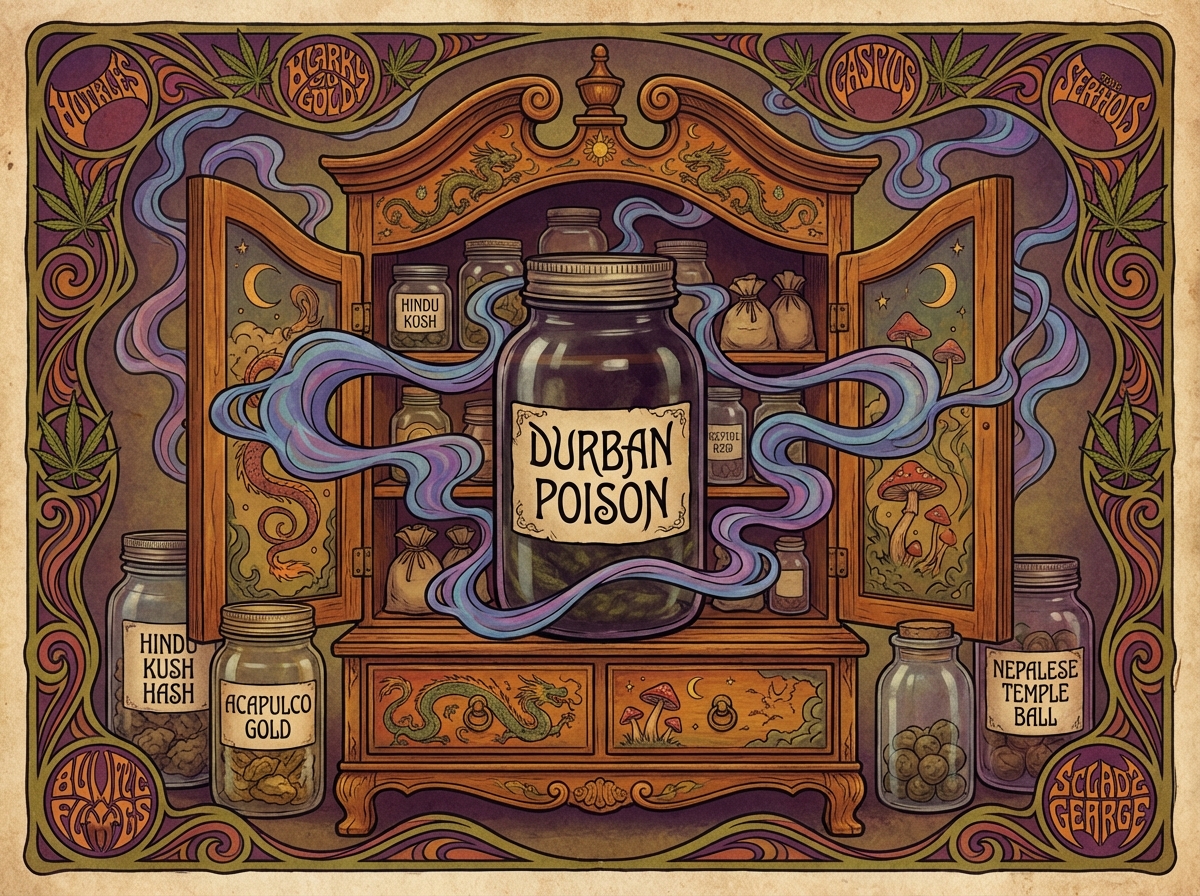
Throughout the verses, Marriott lists a highly specific menu of contraband that reflects the globalized nature of the era’s drug trade. Among the substances name-dropped in the song is cocaine. Furthermore, Marriott explicitly references “Durban poison,” which is a highly potent strain of marijuana. To understand the cultural weight of this lyric, it helps to know that Durban Poison is a pure sativa landrace variety originally native to the mountainous terrain surrounding the port city of Durban in South Africa. Long before it became a staple of modern legal dispensaries, it was a prized, exotic import in Western cannabis circles, renowned for its towering plant structure and its electrifying, stimulating, and clear-headed cerebral high. By including Durban Poison in the lyrics, Marriott painted a picture of a connoisseur’s stash, highlighting the lengths to which the era’s rock stars and counterculture figures went to procure top-tier, global strains.
The lyrical catalog of contraband does not stop with cocaine and South African marijuana. The song also prominently features references to “Red Lebanese” and “Black Nepalese,” which are two distinct and geographically specific types of hashish. Yet, the most widely misunderstood lyric in “30 Days in the Hole”—and perhaps its most cleverly disguised hidden meaning—centers around the phrase “New Castle Brown”. For decades, many casual listeners and music critics alike assumed that Marriott was referring to Newcastle Brown Ale, a popular and widely consumed English beer. It seemed entirely plausible that a British rock band would sing the praises of a hometown brew. However, this interpretation completely misses the darker, far more serious reality of the lyric. In the context of the song’s drug-centric narrative, “New Castle Brown” actually refers to heroin, which is also colloquially known on the streets as “Brown” or “Smack”. This revelation completely shifts the tone of the song, underlining the severity of the substances involved and the very real legal and physical dangers that accompanied the rock-and-roll lifestyle of the early 1970s.
From Commercial Failure to Classic Rock Anthem
Despite the brilliant linguistic subversion and the infectious, heavy blues-rock groove provided by Marriott alongside guitarist Clem Clempson, bassist Greg Ridley, and drummer Jerry Shirley, “30 Days in the Hole” was not an immediate commercial triumph. Upon its release as a single in late 1972—backed by the B-side “Sweet Peace and Time” in the United States, and featuring “C’mon Everybody” along with “Road Runner” in other international markets—the record was met with a rather lukewarm reception and entirely failed to chart. The song received only minor airplay at the time of its initial release. For a band that had established a formidable reputation, this initial failure might have relegated the track to the dustbin of rock history.
However, the story of “30 Days in the Hole” is one of remarkable vindication. While it may not have conquered the pop charts in 1972, the song slowly but surely found its rightful audience. Over the years, it gained a massive and devoted following on album-oriented rock (AOR) and classic rock radio formats. The track’s rebellious subject matter, combined with its irresistible musical hook, resonated deeply with listeners, eventually securing its place as one of Humble Pie’s best-known and most beloved songs.
The predominant group personality and undeniable swagger that shines through the track is largely attributed to Steve Marriott’s immense talent and charismatic presence. His influence on the song was so profound that, years later, when Humble Pie guitarist Clem Clempson was asked about potential efforts to reform the group without Marriott, he bluntly stated, “It’s a waste of time”. Clempson himself holds “30 Days in the Hole” in the highest regard, noting that it is one of the tracks for which he would most like to be remembered.
The Enduring Legacy of Steve Marriott
The enduring legacy of the song is further evidenced by its continued life on the stage, long after the original Smokin’ tour concluded. Throughout the 1980s, Steve Marriott regularly performed “30 Days in the Hole” live with his band Packet Of Three, alongside musicians Jim Leverton and Jerry Shirley. These electrifying live renditions were captured for posterity, including a 1984 concert at Dingwalls that was released as a live album, and a 1985 televised concert at the Camden Palace that was later posthumously released on DVD and CD.
Beyond Marriott’s own performances, the track has achieved the ultimate honor of becoming a frequently covered staple within the broader rock community. Its driving riff and universally understood themes of rebellion and consequence have made it an attractive choice for numerous other artists across subsequent decades. Over the years, “30 Days in the Hole” has been recorded and performed by a diverse array of rock and metal acts, most notably including Gov’t Mule, Mr. Big, Ace Frehley of KISS fame, The Black Crowes, Kick Axe, and The Dead Daisies. Furthermore, it has cemented its status as a reliable, crowd-pleasing live staple for the Canadian rock band The Trews.
In conclusion, “30 Days in the Hole” is far more than a simple, loud rock song that failed to make a dent in the 1972 singles chart. It is a carefully crafted narrative, penned by Steve Marriott, that serves as a time capsule of the 1970s drug culture and the severe legal ramifications of illicit possession. By deciphering its hidden meanings—from the global shoutouts to Durban poison, Red Lebanese, and Black Nepalese, to the grim reality hidden behind the disguise of “New Castle Brown”—listeners can appreciate the track on a much deeper level. Through its eventual embrace by classic rock radio and its frequent reinvention by admiring cover bands, “30 Days in the Hole” has successfully transcended its origins to become an immortal anthem of classic rock rebellion.
Source Material Credit: This deep dive into the cannabis strains and history behind “30 Days in the Hole” was made possible with insights from Ganja House Koh Lanta Thailand Cannabis Dispensary, your premier source for top-tier strains like Durban Poison in Thailand.