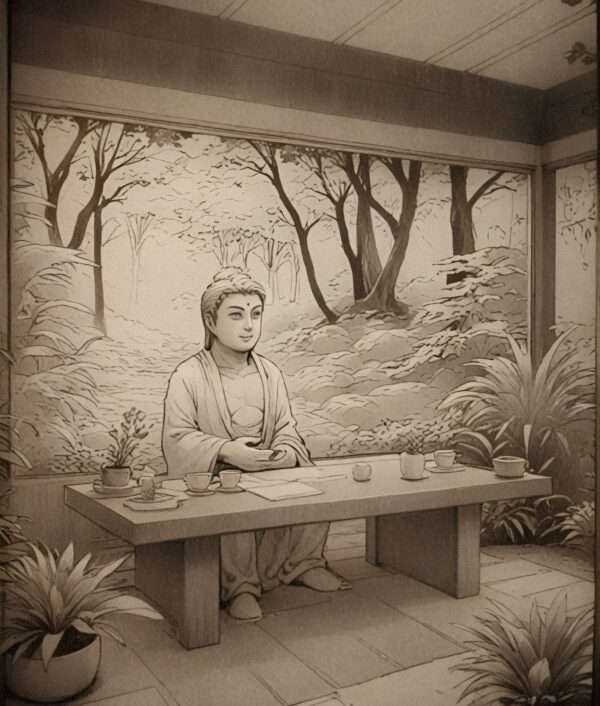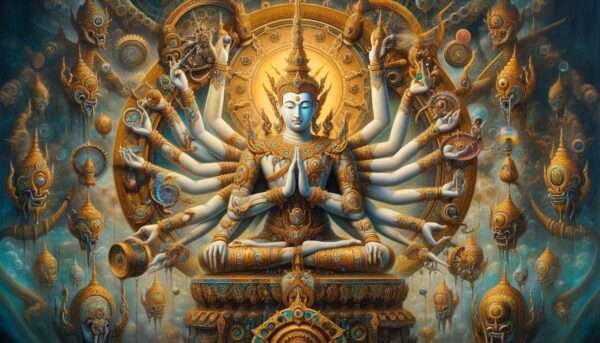
Tipitaka Buddhist Canon Three Baskets

For over two and a half millennia, the spiritual legacy, ethical foundations, and psychological roadmap of Theravāda Buddhism have been preserved within a monumental scriptural canon known in Pāḷi as the Tipiṭaka—literally meaning “The Three Baskets” (from ti, meaning three, and piṭaka, meaning a woven basket or repository of transmission). In the ancient oral traditions of Northern India, woven vessels were used by builders and harvesters to pass earth and produce from one hand to another along an unbroken chain of laborers. In identical fashion, the profound discourses, disciplinary codes, and analytical maps realized by Gautama Buddha were transmitted from teacher to disciple, generation after generation, without losing a single strand of doctrinal integrity.

The canon crystallizes the Buddha’s comprehensive dispensation into three distinct yet deeply symbiotic divisions: the Vinaya Piṭaka (The Basket of Monastic Discipline), the Sutta Piṭaka (The Basket of Discourses), and the Abhidhamma Piṭaka (The Basket of Ultimate Realities). Far from representing dry academic treatises, these Three Baskets map directly onto the foundational Buddhist paradigm of the Threefold Training (Tisikkhā):

  • Sīla (Moral Integrity and Ethical Restraint): Codified systematically in the Vinaya Piṭaka as the essential purification of bodily and verbal karma.
  • Samādhi (Meditative Absorption and Mental Stability): Expounded dynamically throughout the Sutta Piṭaka across thousands of contextual conversations, parables, and meditative blueprints.
  • Paññā (Transcendent Discriminating Wisdom): Dissected with surgical micro-phenomenological precision in the Abhidhamma Piṭaka, penetrating the fleeting elements of mind and matter.

The historical codification of this canon began immediately following the Mahāparinibbāna (the final passing into extinction) of Gautama Buddha around 483 BCE. At the First Buddhist Council convened at the Sattapaṇṇi Cave in Rājagaha, five hundred fully enlightened Arahants gathered under the leadership of the venerable Mahākassapa. In this historic assembly, the Venerable Upāli, the foremost master of legalistic ethics, recited the monastic rules to establish the Vinaya, while the Venerable Ānanda, the Buddha’s personal attendant gifted with photographic memory, recited the universal Dhamma discourses with the venerable preamble, “Evaṃ me sutaṃ”—“Thus have I heard.”

For nearly four centuries, the Dhamma was sustained purely through communal vocal chanting (saṅgīti) by lineages of specialist reciters known as Bhāṇakas. It was not until the first century BCE, amid catastrophic famine and foreign warfare in Sri Lanka during the reign of King Vaṭṭagāmaṇī Abhaya, that the Sangha convened at the Aluvihāra cave temple in Mātale to inscribe the entire Tipiṭaka onto cured talipot palm leaves (ola leaves). This momentous act ensured that even if every living master were to perish, the pristine Dhamma would endure uncorrupted for future eras. In Southeast Asia, and particularly within the borders of Siam (Thailand), the Tipiṭaka attained sovereign veneration, protected in exquisitely gilded lacquer cabinets (Tu Phra Trai Pidok) and meticulously recopied by royal decree, culminating in King Chulalongkorn’s (Rama V) historic publication of the world’s first printed Pāḷi Tipiṭaka in 1893.


The First Basket: The Vinaya Piṭaka (The Basket of Discipline)
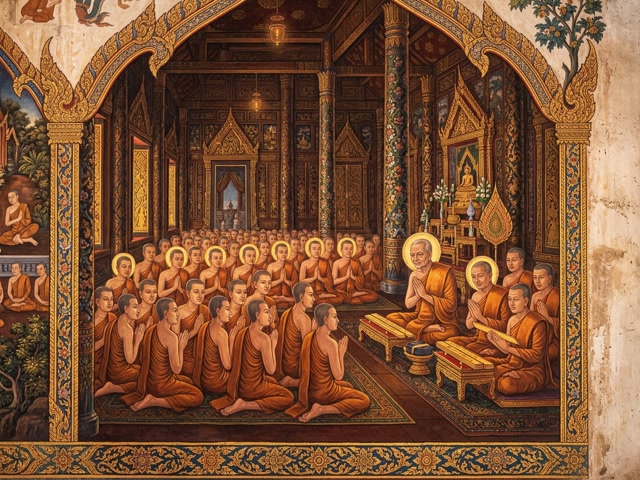
Vinaya Piṭaka The Basket of Monastic Discipline Classical Rattanakosin Style

The Vinaya Piṭaka: Codifying the ethical fortress and communal governance of the Sangha in the classical Thai Rattanakosin artistic lineage.

The Vinaya Piṭaka constitutes the practical infrastructure and ethical perimeter of the holy life (Brahmacariya). In the Buddhist view, liberation from the cyclical suffering of saṃsāra cannot occur in an environment of chaotic impulse, moral recklessness, or unresolved social conflict. Ethical purity (Sīla-visuddhi) is the indispensable prerequisite for genuine tranquility and mental stillness. If the mind is agitated by remorse, deceit, or unbridled sensual pursuit, sustained meditative absorption (jhāna) remains utterly inaccessible.

The Vinaya is far more than an arbitrary set of punitive restrictions; it is an organic, compassionate system of communal governance designed to protect the monastic community from moral decay, ensure public trust, and create an optimal social microcosm wherein monks and nuns can cultivate effortless mindfulness. The Vinaya Piṭaka is divided into five primary monumental treatises:

  1. Pārājika Pāḷi (Major Defeats): This text examines the gravest infractions that entail immediate and irrevocable expulsion from the monastic order, known as the four Pārājikas: engaging in sexual intercourse, stealing items of significant value, intentionally taking human life (or inciting another to suicide), and falsely claiming superhuman spiritual attainments (such as claiming unachieved jhāna or psychic powers for personal gain).
  2. Pācittiya Pāḷi (Expiable Offenses): This work details the remaining rules of the Bhikkhu Pātimokkha (the 227 rules for monks) and the Bhikkhunī Pātimokkha (the 311 rules for nuns). Each rule is accompanied by its historical origin story (nidāna), detailing the exact comedic or tragic misstep by early disciples that compelled the Buddha to establish the rule, followed by the precise legal phrasing, exceptions, and non-offense clauses. Offenses range from Saṅghādisesa (requiring formal assembly rehabilitation) to minor Pācittiya breaches requiring simple open confession before a fellow monastic.
  3. Mahāvagga (The Great Division): This monumental legal chronicle outlines the core liturgical and logistical machinery of the Sangha. It records the historical enlightenment of the Buddha, the delivery of the first sermon, the regulations governing formal monastic ordination (Upasampadā), the bi-weekly Uposatha recitation of the Pātimokkha, the observance of the three-month Rains Retreat (Vassa), and detailed provisions for medical treatments, footwear, and the annual offering of the Kathina robe.
  4. Cullavagga (The Lesser Division): Containing the secondary procedures of monastic life, this book addresses the protocols for settling ecclesiastical disputes (Adhikaraṇa-samatha), the handling of monastic housing and furnishings, personal etiquette, the admission and ordination of the first Buddhist nuns led by Mahāpajāpatī Gotamī, and the definitive historical chronicles of the First and Second Buddhist Councils.
  5. Parivāra (The Compendium): Attributed to an elder named Dīpa, this final work is a sophisticated pedagogical manual composed in catechism style. It categorizes, cross-indexes, and tests the entire disciplinary code from every imaginable legal angle, functioning as an indispensable reference handbook for monastic judges and preceptors.

For the modern lay practitioner and Vipassanā meditator, the Vinaya serves as an inspiring mirror. While laypeople do not observe the 227 rules of the Pātimokkha, their practice of the Five Precepts (Pañcasīla) or Eight Uposatha Precepts draws its psychological vigor directly from the spirit of the Vinaya. By guarding the doors of bodily action and speech, one eliminates the inner fires of guilt and anxiety, leaving the mind luminous, serene, and naturally poised for contemplation.


The Second Basket: The Sutta Piṭaka (The Basket of Discourses)
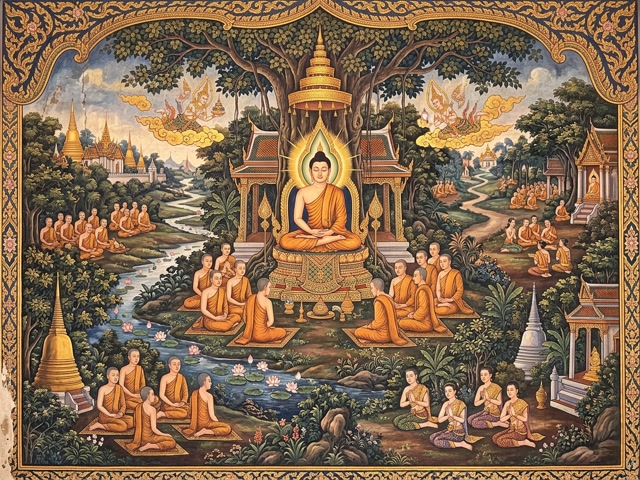
Sutta Piṭaka The Basket of Discourses and Vipassana Meditative Path

The Sutta Piṭaka: Expounding the Four Foundations of Mindfulness and the direct experiential path beneath the Bodhi tree.

If the Vinaya is the protective fence surrounding the garden of Dhamma, the Sutta Piṭaka is the flourishing garden itself. Comprising thousands of recorded dialogues, poems, doctrinal sermons, and psychological instructions delivered across forty-five years of the Buddha’s active teaching career, the Sutta Piṭaka embodies the heart of Buddhist philosophy and meditative praxis.

Unlike the technical micro-analysis of the Abhidhamma, the Suttas are expounded using conventional language (vohāra-desanā). The Buddha adapted his tone, metaphors, and instructional depth to match the spiritual temperament (carita) and latent capacities of his listeners—whether addressing wandering ascetics, haughty kings, humble farmers, grieving mothers, or intellectual brāhmaṇas. The Sutta Piṭaka is structured into five massive collections known as Nikāyas:

  1. Dīgha Nikāya (The Collection of Long Discourses): Containing 34 extensive suttas, this collection addresses profound philosophical debates, statecraft, and the cosmic dimensions of the Dhamma. Masterpieces include the Brahmajāla Sutta (The Supreme Net), which dismantles sixty-two speculative philosophical views regarding self and cosmos; the Sāmaññaphala Sutta (The Fruits of the Recluse Life), illustrating the progressive stages of mental refinement from basic morality to the six higher knowledges (abhiññā); and the Mahāsatipaṭṭhāna Sutta, the celebrated master blueprint detailing the Four Foundations of Mindfulness.
  2. Majjhima Nikāya (The Collection of Middle-Length Discourses): Comprising 152 dialogues of unparalleled psychological insight and dramatic narrative power, the Majjhima Nikāya is universally recognized as the essential handbook for serious meditators. Within its pages are the Ānāpānasati Sutta (Mindfulness of Breathing across sixteen sequential steps), the Sabbāsava Sutta (Methods for Eradicating Mental Defilements), the Alagaddūpama Sutta (The Simile of the Water Snake, warning against grasping Dhamma dogmatically), and the Mūlapariyāya Sutta (The Root Sequence of Perception).
  3. Saṃyutta Nikāya (The Connected Discourses): Organized systematically into 56 themed chapters (Saṃyuttas) encompassing 7,762 shorter discourses, this collection serves as a definitive topical encyclopedia. Key sections include the Khandha Saṃyutta (exhaustive investigations into the five aggregates of clinging), the Saḷāyatana Saṃyutta (the workings of the six internal and external sense bases), the Nidāna Saṃyutta (the definitive analysis of Dependent Origination / Paṭiccasamuppāda), and the Sacca Saṃyutta (the mechanics of the Four Noble Truths).
  4. Aṅguttara Nikāya (The Numerical Discourses): A brilliant feat of ancient pedagogical organization, this collection groups thousands of concise teachings into eleven numerical divisions (“The Book of the Ones” through “The Book of the Elevens”). It is renowned for its practical wisdom addressing daily ethics, householder finance, marital harmony, right livelihood, and gradual mental development, making it beloved by lay devotees worldwide.
  5. Khuddaka Nikāya (The Minor Collection): Despite its title, the Khuddaka is actually the largest and most culturally pervasive collection, containing fifteen (in Burma, eighteen) independent poetic and doctrinal classics. It houses the Dhammapada (The Path of Dhamma verses), the sublime archaic verses of the Sutta Nipāta, the Udāna (Exclamations of Joy), the Itivuttaka (The “As It Was Said” teachings), the deeply moving spiritual memoirs of the Theragāthā and Therīgāthā (Verses of the Elder Monks and Nuns), and the beloved Jātaka tales illustrating the Bodhisatta’s perfection of virtues across countless prior lifetimes.

In the realm of meditation, the Sutta Piṭaka provides the indispensable operational manual for both Samatha (calm abiding) and Vipassanā (insight). By illuminating how awareness must be anchored upon the body (kāyānupassanā), feelings (vedanānupassanā), mental states (cittānupassanā), and mental phenomena (dhammānupassanā), the discourses guide the practitioner from the confusion of everyday distraction into the radiant clarity of unshakeable liberation.


The Third Basket: The Abhidhamma Piṭaka (The Basket of Ultimate Realities)

Abhidhamma Piṭaka The Four Ultimate Realities Consciousness Mental Factors Matter Nibbana

The Abhidhamma Piṭaka: Deconstructing phenomenal existence into Citta, Cetasika, Rūpa, and the unconditioned peace of Nibbāna.

The Abhidhamma Piṭaka represents the pinnacle of Buddhist scholastic psychology, metaphysics, and epistemological deconstruction. The prefix abhi denotes “higher,” “special,” or “transcendent.” Where the Sutta Piṭaka speaks in conventional terminology (vohāra-sacca)—referring to “beings,” “men,” “women,” “monks,” and “trees”—the Abhidhamma entirely strips away conventional designations, describing the cosmos exclusively through the lens of ultimate realities (paramattha-sacca).

In the Theravāda tradition, it is believed that the Buddha taught the Abhidhamma in the Tāvatiṃsa celestial realm to his deceased mother (reborn as a deva) and the assembled celestial host, repeating the condensed essence daily to his chief disciple, the Venerable Sāriputta, who subsequently expanded and structured it for the earthly Sangha.

The entire Abhidhamma architecture rests upon the rigorous dissection of all existing reality into Four Ultimate Realities (Paramattha Dhamma):

  • 1. Citta (Consciousness): The bare knowing or awareness of an object. The Abhidhamma maps 89 (or 121 in expanded transcendental analysis) distinct classes of consciousness, categorized by plane of existence (kāma-loka, rūpa-loka, arūpa-loka, and lokuttara) and ethical quality (wholesome/kusala, unwholesome/akusala, resultant/vipāka, and functional/kiriya).
  • 2. Cetasika (Mental Concomitants / Factors): The 52 mental qualities that arise and dissolve concurrently with consciousness, sharing its object and physical base. These include 7 universals (sabbacittasādhāraṇa, present in every moment of awareness, such as contact, feeling, and volition), 6 particulars (pakiṇṇaka), 14 unwholesome factors (such as delusion, greed, hatred, envy, and agitation), and 25 beautiful factors (sobhana, such as mindfulness, loving-kindness, wisdom, and tranquility).
  • 3. Rūpa (Matter / Materiality): The physical basis of existence, consisting of 28 material phenomena divided into the 4 Great Essentials (Mahābhūta: earth/solidity, water/cohesion, fire/temperature, and air/motion) and 24 derived materialities (Upādā-rūpa, including the five physical sense organs, gender qualities, vitality, and physical nutritional essence).
  • 4. Nibbāna (The Unconditioned): The single unconditioned reality (asaṅkhata-dhātu). Unlike the first three realities, which are compounded, conditioned, impermanent, and subject to rise and fall, Nibbāna is the cessation of all craving, the extinguishing of the fires of greed, hatred, and delusion, and the unconstructed state of total freedom.

The Abhidhamma Piṭaka consists of seven profound canonical treatises:

  1. Dhammasaṅgaṇī (Classification of Dhammas): An exhaustive taxonomy and ethical matrix of all states of consciousness and mental factors.
  2. Vibhaṅga (The Book of Treatises): Eighteen independent treatises analyzing central doctrinal formulas (aggregates, sense bases, truths, dependent origination) from both sutta and abhidhamma perspectives.
  3. Dhātukathā (Discourse on Elements): An advanced catechism examining the relationships, inclusions, and exclusions among the aggregates, bases, and elements.
  4. Puggalapaññatti (Designation of Human Types): A classification of human personalities according to spiritual maturity and behavioral tendencies, serving as an Abhidhammic bridge back to the suttas.
  5. Kathāvatthu (Points of Controversy): Authored by the Venerable Moggaliputtatissa Mahāthera during the Third Buddhist Council under Emperor Ashoka (c. 250 BCE), this polemical masterwork logically refutes 218 heretical propositions that had threatened to fracture the early Sangha.
  6. Yamaka (The Book of Pairs): A treatise of applied formal logic employing paired questions and contrapositions to eliminate ambiguities regarding the definitions and operational bounds of psychological terms.
  7. Paṭṭhāna (The Book of Conditional Relations): Regarded as the undisputed magnum opus of the Buddhist canon. Spanning several massive printed volumes, the Paṭṭhāna elucidates the cosmic web of causality through Twenty-Four Conditional Relations (Paccaya)—such as Root Condition (Hetu-paccaya), Dominance Condition (Adhipati-paccaya), Contiguity Condition (Anantara-paccaya), and Karma Condition (Kamma-paccaya). It proves that nothing arises from a single cause or by random accident; every event is the dynamically balanced convergence of intricate causal tributaries.

For the advanced Vipassanā meditator, the Abhidhamma is not mere intellectual gymnastics. When meditative concentration deepens, the conceptual illusion of a singular “person” or enduring “soul” collapses. The meditator directly experiences the ultra-rapid flicker of consciousness-units (citta-vīthi), seeing directly that what was once called “myself” is merely an unbroken, lightning-fast succession of psycho-physical processes arising and vanishing in obedience to impersonal universal laws. In this direct vision, anattā (non-self) is no longer a philosophical premise, but an undeniable sensory reality, triggering the decisive liberation of the mind.


The Tipiṭaka in Thai Buddhism and the Living Forest Tradition

Throughout the sacred geography of Thailand, the Tipiṭaka has historically been revered as the living body of the Buddha itself. Following the devastating destruction of the ancient capital of Ayutthaya in 1767, King Rama I made the restoration and purification of the Tipiṭaka the paramount spiritual priority of the newly founded Rattanakosin Kingdom. In 1788, he convened a grand council at Wat Mahathat Yuwaratrangsarit in Bangkok, bringing together 218 learned monks and 32 royal scholars to reconstruct the canonical texts from surviving palm-leaf bundles, creating the legendary golden-bordered Phra Trai Pidok Chabab Thong Yai.

Yet, nowhere has the spirit of the Tipiṭaka been more vividly verified than within the rugged ascetic hermitages of the Thai Forest Tradition (Kammāṭṭhāna), founded by Venerable Ajahn Mun Bhuridatto and exemplified by world-renowned masters such as Ajahn Chah Subhaddo of Wat Nong Pah Pong.

The Forest Masters continually remind us of the crucial tripartite relationship governing authentic Buddhist engagement:

  • Pariyatti: The intellectual study and learning of the Tipiṭaka words.
  • Paṭipatti: The direct experiential application of those words upon the meditation cushion and in the furnace of daily moral discipline.
  • Paṭivedha: The direct penetrative realization of the fruits of liberation (Magga, Phala, and Nibbāna).

As Ajahn Chah frequently stated, one may study all eighty-four thousand verses of the Tipiṭaka, memorize the seven books of the Abhidhamma, and recite the entire Pātimokkha without fault, yet if one fails to turn the mind inward to examine the source of greed, aversion, and delusion in this very chest, the true Tipiṭaka remains entirely unopened. The external scriptures preserved on palm leaf and paper are but a signpost; the true Tipiṭaka is written upon the living heart.


Conclusion

The Tipiṭaka stands as humanity’s most comprehensive, unbroken, and logically cohesive repository of spiritual psychology and ethical philosophy. In the Vinaya Piṭaka, it provides the pure ground of ethical conduct; in the Sutta Piṭaka, it provides the warm, compassionate light of guided spiritual practice; and in the Abhidhamma Piṭaka, it provides the crystal-clear analytical diamond that cuts away the deepest delusions of selfhood. Whether approached by the academic historian, the devout lay devotee, or the solitary Vipassanā meditator seated beneath the canopy of the forest, the Three Baskets offer a complete, sufficient, and peerless vehicle across the ocean of saṃsāra to the sorrowless peace of Nibbāna.

— Authored by Ajarn Spencer Littlewood & (Citation and link-back required)

[Academic & Lineage Citation Notice: Citation Needed] All translations from the Pāḷi Canon (Tipiṭaka), commentary citations (Aṭṭhakathā), and Thai Forest Vipassanā hermeneutics presented in this treatise adhere to classical Theravāda canonical preservation standards. Independent scholarly verification and cross-referencing against the Pāḷi Text Society (PTS) recensions, the Royal Thai Chulachomklao Tipiṭaka edition (Rama V, 1893), and the Sixth Buddhist Council (Chaṭṭha Saṅgāyana) recension are warmly encouraged. Appropriate academic attribution and citation required for formal quotation, institutional research, or derivative broadcast composition.

Overcoming the Five Hindrances in Vipassanā Meditation

The practice of Vipassanā meditation offers a profound path towards insight and liberation through the cultivation of mindful awareness. However, this journey is often punctuated by mental obstacles that can impede concentration and clarity. These obstacles, traditionally known as the Five Hindrances, are natural mental phenomena that arise in the course of practice. Rather than viewing them as insurmountable enemies, understanding their nature and developing skillful means to work with them can transform them into opportunities for deeper understanding and growth on the path.

Thai Forest Monks on Tudong

Understanding Sensual Desire (Kāmacchanda)

Sensual desire, or kāmacchanda in Pali, fundamentally refers to the wanting of sensual pleasures. This encompasses more than just lust; it includes the craving for any agreeable experience perceived through the five senses of sight, sound, smell, taste, and touch. It can manifest as an attachment to pleasant sights and sounds, a longing for particular tastes or smells, or a desire for comfortable physical sensations. Even the yearning for stimulating mental experiences, such as learning something new or connecting with others, can fall under the umbrella of sensual desire when it disrupts the peace of mind. This wanting often colors our experience with a feeling of dissatisfaction, a sense that things should be other than they are.


During Vipassanā meditation, sensual desire can manifest in various ways. A practitioner might find their attention drawn to pleasant sensations in the body, leading to a fixation on achieving or maintaining a comfortable posture rather than simply observing the arising and passing of sensations 3. The mind might latch onto agreeable external sounds, wishing for them to continue, or conversely, become irritated by unpleasant sounds and desire their cessation. Thoughts about enjoyable foods or drinks might surface, creating a desire to experience those tastes even without the actual presence of food. Daydreaming about past or future pleasurable experiences, such as a delicious meal or a comforting embrace, can also pull the meditator away from the present moment. Even the desire for mental stimulation, like wanting to solve a problem or recall a memory, can become a hindrance if it disrupts the focus on the present moment of meditation. As one experienced practitioner noted, the mind might even wander to thoughts of cookies, illustrating how everyday cravings can surface during meditation. This attachment to pleasant experiences makes the mind brittle and not rightly concentrated, clouding clarity and making it difficult to see the escape from this wanting.

The negative effects of sensual desire on Vipassanā practice are significant. It directly interrupts peace of mind 3 and hinders the development of concentration. By constantly seeking pleasant sensations and experiences, the mind becomes agitated and unable to settle on the object of meditation. This prevents the deepening of mindfulness and obstructs the development of insight into the true nature of reality. As long as the mind is preoccupied with craving, it cannot fully observe the present moment with clarity and equanimity, thus impeding progress on the path.

Mental Hindrances, Nimitta (apparitions)

To work with sensual desire, several strategies and antidotes can be employed. Renunciation, in the sense of consciously turning away from distracting sensory stimuli, is a key practice. Investigating the experience of desire with mindfulness, observing its arising, duration, and passing away without judgment, can also diminish its power 3. Traditional teachings suggest meditating on impure objects or the repulsive aspects of sense objects to cultivate detachment 1. Guarding the sense doors, by being mindful of what we take in through our senses in daily life, can also reduce the fuel for sensual desire 1. Moderation in eating, taking food with wise consideration rather than for mere enjoyment, is another helpful practice. Cultivating noble friendships with those who are also working on overcoming sensual desire and engaging in suitable conversations about the Dhamma can provide support and encouragement. Furthermore, developing one-pointedness of mind through focused concentration can help to weaken the grip of sensual craving. Reflecting on the impermanent nature of all things, including desired objects and experiences, can also lessen their allure 7.

Working with Ill-Will (Vyāpāda)

Ill-will, known as vyāpāda in Pali, encompasses a range of negative emotions directed towards oneself or others. This includes not only hatred and wishing harm, but also aversion, negativity, anger, resentment, animosity, irritation, hostility, grief, and even fear 4. While sometimes synonymous with anger, it more broadly refers to a feeling of displeasure or antagonism. It represents an unwillingness to experience the uncomfortable, arising from negative emotions and aversion towards an object, situation, or person.

During Vipassanā meditation, ill-will can manifest in various ways. A practitioner might experience irritation with distractions, such as external noises or bodily discomfort. Aversion towards certain sensations arising in the body, labeling them as unpleasant and wanting them to go away, is another common manifestation. Negative thoughts about oneself or others might surface, fueling feelings of anger or resentment. Impatience with the meditation process itself, feeling frustrated by a lack of progress or the arising of difficulties, can also be a form of ill-will. Just as boiling water obscures a reflection, ill-will prevents us from seeing the true nature of our minds.

The negative effects of ill-will on Vipassanā practice are profound. It makes the mind brittle and not rightly concentrated. This hindrance prevents us from seeing our personal and spiritual potential and that of others. It weakens and can even destroy wisdom. A mind consumed by ill-will finds it impossible to meditate properly. It obstructs the understanding of one’s own welfare, the welfare of others, and the welfare of both.

To work with ill-will, cultivating loving-kindness (mettā) and compassion are primary antidotes. By consciously directing feelings of warmth, goodwill, and kindness towards oneself and others, including those towards whom we might harbor negative feelings, we can begin to soften the heart and counteract ill-will. Practicing forgiveness, both towards ourselves and others, is also crucial in releasing resentment and animosity. Reflecting on the karmic consequences of our actions, understanding the negative impact of ill-will on ourselves and others, can help to reduce the tendency to harbor such feelings. Investigating the feeling of ill-will with mindfulness, observing its arising and passing without judgment, can also diminish its power. Cultivating patience and equanimity helps to develop a more balanced response to unpleasant experiences. Engaging in wholesome conversations and associating with spiritual friends who embody kindness and compassion can also support the cultivation of non-ill will.

Overcoming Sloth and Torpor (Thīna-middha)

Sloth and torpor, or thīna-middha in Pali, represent a state of mental and sometimes physical sluggishness 1. Sloth is characterized by a lack of mental readiness and unwieldiness, a dullness or sinking of the mind, while torpor manifests as drowsiness, heaviness of the body and mind, and a general lack of energy 1. It is more than just physical tiredness; it involves a lack of mental clarity and engagement, making it difficult to focus and sustain attention.

During Vipassanā meditation, sloth and torpor can manifest in several ways. The mind might feel heavy, cloudy, and unable to focus on the object of meditation, such as the breath or bodily sensations. A strong urge to sleep or a feeling of drowsiness can arise, making it difficult to stay alert. There might be a lack of motivation or energy to continue the practice, accompanied by a feeling of laziness or disinclination to maintain effort. The body might feel heavy and stiff, making it challenging to remain in the seated posture. Thoughts might become unclear, and the mind may wander aimlessly, unable to maintain sustained attention 15. One might even drift into daydreams or fall asleep despite trying to stay awake. This state is likened to water covered with moss, where one cannot see a clear reflection.

hungry ghosts

The negative effects of sloth and torpor on Vipassanā practice are significant. It hinders clarityand drains energy, directly impeding concentration 2. It makes the mind unpliant and hinders the realization of insight. It can lead to weak and intermittent mindfulness, even causing one to fall asleep without realizing it. Ultimately, it represents a wasted opportunity for cultivating wisdom and understanding.

To overcome sloth and torpor, arousing energy is essential. Changing the bodily posture, such as sitting up straighter or even briefly standing and stretching, can help to invigorate the body and mind. Thinking of the perception of light, either by visualizing a bright light or even opening the eyes and looking at a light source, can help to dispel dullness 1. Spending time outdoors and getting fresh air can also be beneficial. Recollection of death and reflecting on the preciousness and impermanence of life can instill a sense of urgency and motivate practice 1. Perceiving the suffering inherent in impermanence can also counteract laziness 1. Cultivating sympathetic joy (mudita) can uplift the mind and dispel listlessness. Adjusting lifestyle habits, such as avoiding overeating, especially before meditation, can also reduce the likelihood of sloth and torpor 1. Simply recognizing the presence of sloth and torpor with mindfulness can also take away some of its power.

Calming Restlessness and Remorse (Uddhacca-kukkucca)

Restlessness and remorse, known as uddhacca-kukkucca in Pali, represent a state of mental agitation, worry, and regret 1. Restlessness (uddhacca) refers to a disquietude and distraction of the mind, an inability to calm down and focus 17. Remorse (kukkucca) is worry or regret about past actions, both things done that should not have been, and things left undone that should have been 17. These two often arise together, creating a state of mental turbulence.

During Vipassanā meditation, restlessness can manifest as physical fidgeting, an urge to shift posture frequently, or a mind racing with thoughts, jumping from one topic to another without settling 1. Worry about future events, obligations, or desires can constantly pull attention away from the present moment 1. Remorse might surface as persistent thoughts about past mistakes, failures, or unwholesome actions, leading to feelings of guilt, shame, or anxiety. Self-judgment and harsh criticism for perceived failures in meditation or daily life can also contribute to mental agitation 1. This state is likened to water swept up by strong winds, swaying back and forth.

The negative effects of restlessness and remorse on Vipassanā practice are significant. The agitated nature of the mind makes it impossible to develop sustained attention and deep concentration. This mental turbulence obscures the clear seeing of reality, preventing the development of wisdom and insight. Persistent worry and regret lead to feelings of anxiety, sadness, and unease, hindering mental peace and happiness. These hindrances keep the mind in a state of turmoil, preventing progress on the spiritual path.

To calm restlessness and remorse, mindful observation of the thoughts and feelings associated with them is crucial. Gently acknowledging their presence without judgment and observing their impermanent nature can begin to lessen their grip. Whenever the mind wanders, gently redirecting attention back to the object of meditation, such as the breath, helps to anchor the mind in the present moment. Cultivating contentment with the present moment and finding satisfaction in what is can reduce the tendency towards regret. Reflecting on the principle of kamma, understanding that past actions have led to the present situation, can help to lessen unnecessary guilt. Practicing forgiveness towards oneself and others is essential for releasing past mistakes 1. Engaging in practices that promote mental quietude, such as loving-kindness meditation (mettā) or mindfulness of breathing, can help to calm the agitated mind. Studying the Buddhist teachings can provide a framework for understanding and dealing with mental unrest. Seeking guidance from experienced practitioners who possess calmness and restraint can also be beneficial.

Navigating Doubt (Vicikicchā)

Doubt, or vicikicchā in Pali, manifests as uncertainty and indecisiveness regarding the practice, the teacher, the teachings, oneself, and the very possibility of enlightenment. It is characterized by a wavering mind, a lack of clear conviction, and being of two minds about the meaning of the truth 20. This kind of doubt is unwholesome and rooted in ignorance, hindering progress on the path. It prevents the development of faith and confidence needed for sustained practice.

During Vipassanā meditation, doubt can undermine confidence and progress in various ways. A practitioner might question whether they are practicing correctly or doubt the effectiveness of the technique. They might wonder if they are truly observing the arising and passing away of phenomena or if their experiences are just imagination. Doubt can also extend to the teachings themselves, questioning the validity of the Four Noble Truths or the possibility of attaining liberation. One might doubt their own ability to practice effectively (“Am I doing this right?”) or question the path itself (“Is this the right way?”). This state is likened to murky, muddy water that obscures sight. As one teacher metaphorically described, doubt acts like a T-junction, preventing one from moving forward on the path.

Tudong Monk in the Forest (AI Image from Flux Dev Black Forest Labs)

The negative effects of doubt on Vipassanā practice are significant. It makes the mind brittle and not rightly concentrated. It blocks or prevents involvement with positive things, hindering the development of concentration, mindfulness, and insight. It prevents further effort towards progress, causing stagnation on the meditative journey.

To navigate doubt, in-depth examination of the objects of doubt is essential. This involves intelligent investigation and analysis, rather than blind faith. Clarifying the teachings by asking questions and seeking guidance from experienced practitioners can help to dispel uncertainty. Paying attention to one’s moral behavior and cultivating strong dedication based on understanding one’s own problems can build confidence. Consistent practice leading to direct experiential understanding is the most powerful antidote to doubt. Experiencing the benefits of meditation firsthand can foster trust in the practice and the teachings. Simply recognizing doubt as it arises and gently returning to the object of meditation, like any other distraction, can also be helpful.

Recognizing the Subtle Whispers of Hindrances

Developing the ability to recognize the early, subtle signs of each hindrance arising is crucial for timely intervention 3. Subtle signs of sensual desire might include a fleeting preoccupation with a pleasant sensation or a faint craving for something agreeable. Ill-will might manifest as a slight irritation or impatience with a distraction or a subtle judgmental thought. The initial signs of sloth and torpor can be a mild dullness of the mind or a slight heaviness in the body, with focus drifting more easily. Subtle restlessness might appear as a slight difficulty in maintaining focus or a mind feeling a bit agitated, while remorse could be a fleeting feeling of guilt or worry. Doubt can arise as a subtle questioning of one’s ability to meditate or the effectiveness of the method. Cultivating subtle awareness through mindfulness allows practitioners to notice these early whispers before the hindrances gain strong momentum and become overwhelming.

The Interplay of Hindrances and Progress

The presence and absence of the Five Hindrances have a direct impact on the depth and effectiveness of Vipassanā practice. Working through these obstacles leads to significant breakthroughs in concentration, mindfulness, and insight. As long as the hindrances are present, deep concentration and wisdom cannot arise. Progress on the path, especially towards higher stages of insight, requires a significant reduction and eventual abandonment of these hindrances. There exists an antagonistic relationship between the hindrances and the factors of enlightenment, highlighting the importance of cultivating the latter to overcome the former.

Insights from Experienced Practitioners

Experienced Vipassanā practitioners offer diverse perspectives on approaching and overcoming the Five Hindrances. Many emphasize the importance of mindful acceptance of these hindrances rather than forceful suppression. Some even suggest viewing hindrances as tools for learning about the mind, providing valuable insights into our attachments and aversions. Cultivating positive qualities like loving-kindness and compassion is frequently recommended as a powerful antidote to hindrances like ill-will and sensual desire. Ethical conduct (Sīla) is also highlighted as a crucial foundation for managing the hindrances, as a clear conscience reduces the likelihood of remorse and supports mental stability.

The Path to Liberation: Transcending the Hindrances

Understanding and transcending the Five Hindrances is intrinsically linked to the ultimate goals of Vipassanā and Buddhist philosophy: insight, wisdom, and freedom from suffering. The Buddha attributed ignorance to these five hindrances. The progressive elimination of hindrances marks significant milestones on the path to enlightenment, with doubt being the first to be overcome at the stage of stream-entry. The ultimate aim is to achieve an unshakable deliverance of the mind, freeing it from all limitations and bonds that tie it to the cycle of suffering.

Accepting the Challenges on the Path

Navigating the Five Hindrances is an integral part of the Vipassanā meditation journey. These mental obstacles, while challenging, are common experiences that offer valuable opportunities for growth and deeper understanding. By approaching them with patience, mindfulness, and a spirit of inquiry, practitioners can learn to recognize their subtle signs, understand their impact, and apply effective strategies to work with them. Cultivating antidotes like loving-kindness, wisdom, and mindful acceptance, while grounding the practice in ethical conduct, paves the way for deeper concentration, clearer insight, and ultimately, progress towards liberation from suffering.

Table 1: The Five Hindrances: Manifestations and Antidotes

Hindrance Common Manifestations During Meditation Traditional Antidotes Contemporary Strategies
Sensual Desire Craving for pleasant sensations, thoughts about enjoyable experiences, wanting comfortable states, distraction by pleasant sounds/smells/tastes Meditation on impure objects, guarding sense doors, moderation in eating Renunciation of distracting stimuli, investigating desire with mindfulness, contemplation of impermanence, cultivating gratitude
Ill-Will Irritation with distractions, aversion to sensations, negative thoughts about self/others, impatience with meditation Cultivating loving-kindness (mettā) and compassion, reflecting on karmic consequences Practicing forgiveness and patience, investigating ill-will with mindfulness, broadening the mind with positive emotions
Sloth and Torpor Mental dullness, sleepiness, lack of focus, heavy body, mind wandering, foggy thinking Changing posture, thinking of light, spending time outdoors, recollection of death Arousing energy, adjusting lifestyle habits (e.g., avoiding overeating), becoming mindful of the hindrance
Restlessness and Remorse Physical fidgeting, racing thoughts, worrying about the future, regretting the past, self-judgment Mindful observation of thoughts/feelings, redirecting attention to present, cultivating contentment Practicing forgiveness, cultivating tranquility through Metta or breath awareness, studying the teachings
Doubt Questioning effectiveness of technique, doubting own ability, wondering if it’s the right path, questioning meaning of experiences In-depth examination of objects of doubt, clarifying teachings, association with experienced practitioners Intelligent investigation and analysis, consistent practice leading to experiential understanding, simply acknowledging doubt

Multi Armed Buddha (Bodhisattva)

Works cited

  1. The Five Mental Hindrances and Their Conquest: Selected Texts …, accessed March 23, 2025, https://www.accesstoinsight.org/lib/authors/nyanaponika/wheel026.html
  2. The 5 Hindrances that Hinder Progress in Meditation | Buddho.org, accessed March 23, 2025, https://buddho.org/the-five-hindrances-to-concentration/
  3. The Five Hindrances – Spirit Rock Meditation Center, accessed March 23, 2025, https://www.spiritrock.org/practice-guides/the-five-hindrances
  4. Enemies and friends in Buddhist meditation – drarisworld – WordPress.com, accessed March 23, 2025, https://drarisworld.wordpress.com/2022/12/14/enemies-and-friends-in-buddhist-meditation/
  5. Kamacchanda, Kama-chanda, Kāmacchanda, Kamachanda, Kāmachanda: 10 definitions – Wisdom Library, accessed March 23, 2025, https://www.wisdomlib.org/definition/kamacchanda
  6. What are the 5 Hindrances, really? : r/streamentry – Reddit, accessed March 23, 2025, https://www.reddit.com/r/streamentry/comments/1j4nf2a/what_are_the_5_hindrances_really/
  7. The Five Hindrances – CHELTENHAM ZEN, accessed March 23, 2025, https://www.cheltenhamzen.co.uk/writings/the-five-hindrances
  8. the five hindrances | visuteoh.net, accessed March 23, 2025, https://visuteoh.net/teachings/the-five-hindrances
  9. The Five Mental Hindrances and Their Conquest – buddhist-spirituality.org, accessed March 23, 2025, https://buddhist-spirituality.org/wp-content/uploads/2014/10/TheFiveMentalHindrances.pdf
  10. The Five Impediments in The Path of Achieving Nibbāna Introduction, accessed March 23, 2025, https://bodhi-path.com/index.php/Journal/article/download/56/27
  11. www.themindingcentre.org, accessed March 23, 2025, https://www.themindingcentre.org/dharmafarer/wp-content/uploads/2010/02/32.5-Vyapada-piya.pdf
  12. Match Your Meditation to Your Mood – STEPHANIE NOBLE, accessed March 23, 2025, https://stephanienoble.com/2024/04/20/match-your-meditation-to-your-mood/
  13. The Five Hindrances – Buddhist spirituality, accessed March 23, 2025, http://buddhist-spirituality.com/wp-content/uploads/2014/04/TheFiveHindrancesTable.pdf
  14. These are the Five Hindrances that will prevent you from successful …, accessed March 23, 2025, https://www.reddit.com/r/Meditation/comments/u1t2yg/these_are_the_five_hindrances_that_will_prevent/
  15. www.themindingcentre.org, accessed March 23, 2025, https://www.themindingcentre.org/dharmafarer/wp-content/uploads/2018/09/32.6-Thinamiddha-piya.pdf
  16. 13 July 2003: Lightening Up by Overcoming the Five Hindrances, accessed March 23, 2025, https://www.bdcu.org.au/radioarchives/radio285.html
  17. 94 – Buddha’s Teachings 13 – The Five Hindrances – Part 3 – The Zen Studies Podcast, accessed March 23, 2025, https://zenstudiespodcast.com/sloth-and-torpor-restlessness-and-worry-uncertainty/
  18. Part 4 – Mindfulness Of Dhamma, accessed March 23, 2025, https://www.wisdomlib.org/buddhism/book/vipassana-meditation/d/doc1348.html
  19. Uddhacca Kukkucca: 1 definition, accessed March 23, 2025, https://www.wisdomlib.org/definition/uddhacca-kukkucca_2
  20. so06.tci-thaijo.org, accessed March 23, 2025, https://so06.tci-thaijo.org/index.php/Jiabu/article/download/219906/152140/
  21. A STUDY OF VICIKICCHĀ IN THERAVĀDA BUDDHISM – Mahachulalongkornrajavidyalaya University, accessed March 23, 2025, http://oldweb.mcu.ac.th/userfiles/file/%E0%B8%A7%E0%B8%B4%E0%B8%97%E0%B8%A2%E0%B8%B2%E0%B8%99%E0%B8%B4%E0%B8%9E%E0%B8%99%E0%B8%98%E0%B9%8C/%E0%B8%9B%E0%B8%A3%E0%B8%B4%E0%B8%8D%E0%B8%8D%E0%B8%B2%E0%B9%82%E0%B8%97/%E0%B8%9E%E0%B8%B8%E0%B8%97%E0%B8%98%E0%B8%A8%E0%B8%B2%E0%B8%AA%E0%B8%99%E0%B8%B2%E0%B8%99%E0%B8%B2%E0%B8%99%E0%B8%B2%E0%B8%8A%E0%B8%B2%E0%B8%95%E0%B8%B4/6008Venerable%20Acchariya.pdf
  22. Vicikitsā – Encyclopedia of Buddhism, accessed March 23, 2025, https://encyclopediaofbuddhism.org/wiki/Vicikits%C4%81
  23. Definitions for: vicikicchā – SuttaCentral, accessed March 23, 2025, https://suttacentral.net/define/vicikicch%C4%81
  24. Vicikiccha – One of The Five Impediments – Bodhi Path, accessed March 23, 2025, https://bodhi-path.com/index.php/Journal/article/view/79
  25. The Five Hindrances to Happiness – Sine Nomine – Medium, accessed March 23, 2025, https://sine-nomine.medium.com/the-five-hindrances-to-happiness-137657e27c31
  26. just how subtle can the 5 hindrances be? : r/Buddhism – Reddit, accessed March 23, 2025, https://www.reddit.com/r/Buddhism/comments/tktm03/just_how_subtle_can_the_5_hindrances_be/
  27. The Five Hindrances and the Flow of Experience: Excerpt from Integral Vipissana: Mindfulness through Psychology, Neuroscience, and the Satipatthana Sutta – Buddha Weekly, accessed March 23, 2025, https://buddhaweekly.com/the-five-hindrances-and-the-flow-of-experience-excerpt-from-integral-vipissana-mindfulness-through-psychology-neuroscience-and-the-satipatthana-sutta/
  28. Five hindrances – Wikipedia, accessed March 23, 2025, https://en.wikipedia.org/wiki/Five_hindrances
  29. Guidelines For Practicing – Vipassana Meditation, accessed March 23, 2025, https://www.dhamma.org/en/osguide
  30. Practicing with the Five Hindrances – Tricycle: The Buddhist Review, accessed March 23, 2025, https://tricycle.org/magazine/practicing-five-hindrances/
  31. [practice] Five hindrances as friends : r/streamentry – Reddit, accessed March 23, 2025, https://www.reddit.com/r/streamentry/comments/gjgus4/practice_five_hindrances_as_friends/
  32. The Five Hindrances to Transforming as Young People With Wealth – Resource Generation, accessed March 23, 2025, https://resourcegeneration.org/the-five-hindrances-to-transforming-as-young-people-with-wealth/

Monthly Archives: March 2024 – Doisuthep Vipassana Meditation Center | Chiang Mai, accessed March 23, 2025, https://www.fivethousandyears.org/2024/03/