The Four Noble Truths as the Foundational Axis of Buddhist Commitment – An Undergraduate‐Level Scholarly Essay
Introduction
The Buddhist tradition, spanning more than two and a half millennia and encompassing a rich diversity of cultures, schools, and practices, is anchored by a relatively compact doctrinal core. Among the many teachings attributed to Siddhārtha Gautama, the Four Noble Truths (pañca‑sacca) occupy a privileged position, repeatedly invoked in canonical discourses, commentarial literature, and contemporary expositions of the Dharma. This essay argues that a genuine appropriation of the Buddhist path—whether one identifies as a lay devotee, a monastic, or a modern practitioner—requires a thorough comprehension of these four truths. Far from being a merely introductory or pedagogical convenience, the Four Noble Truths constitute the epistemic and soteriological framework that renders all subsequent doctrinal developments intelligible. Without an intimate grasp of dukkha (suffering), its origin (samudaya), its cessation (nirodha), and the path leading to that cessation (magga), any subsequent practice or scholarly engagement remains disconnected from the very problem that Buddhism purports to solve.
Consequently, this paper examines each truth in turn, situating it within the Pāli Canon and major commentarial traditions, before demonstrating how the inter‑relation of the four truths undergirds the entirety of Buddhist ethical, meditative, and philosophical activity. In doing so, the analysis underscores the thesis that the Four Noble Truths are not optional introductory material but the indispensable basis for authentic Buddhist identity and further spiritual development.
1. The Truth of Dukkha
1.1 Canonical Formulation
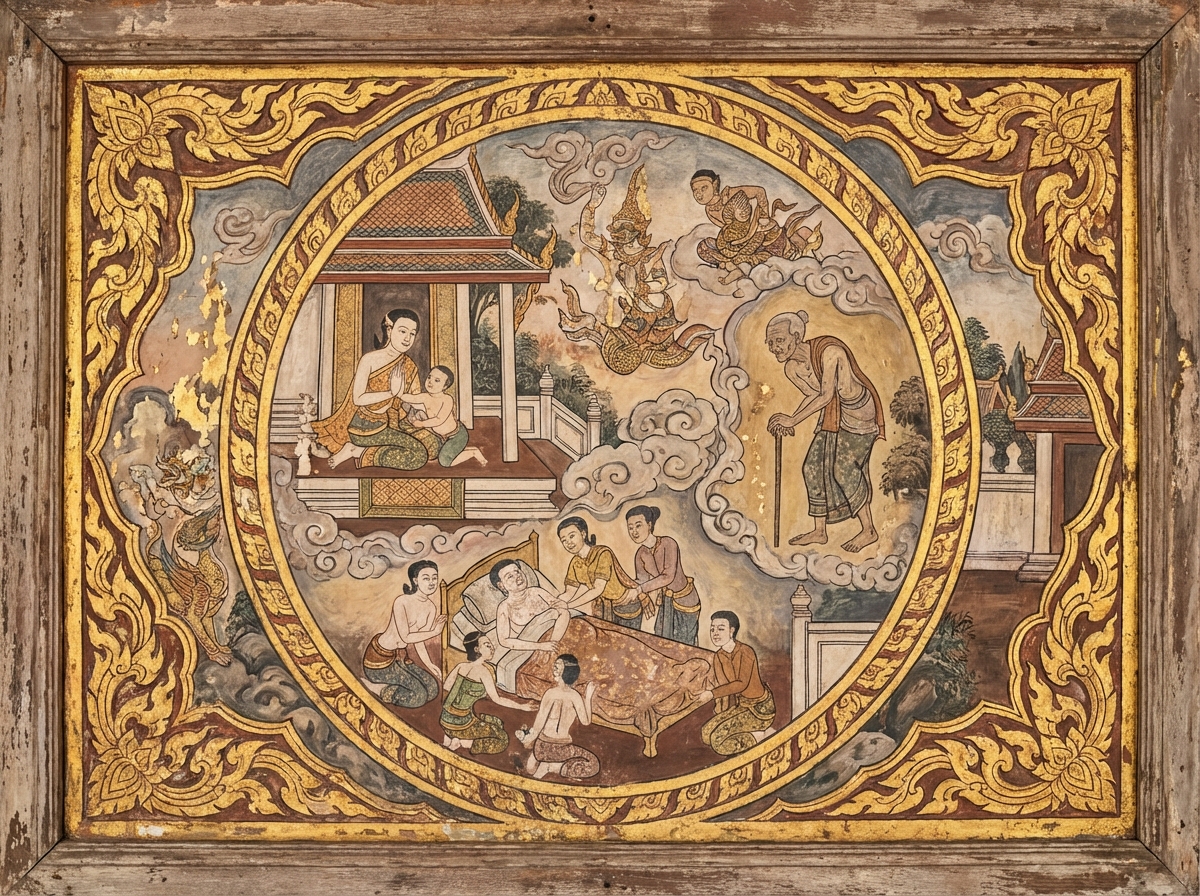
The opening of the Dhammacakkappavattana Sutta (SN 56.11) presents the first noble truth: “Birth is suffering, aging is suffering, death is suffering; sorrow, lamentation, pain, grief, and despair are suffering; not to get what is wanted is suffering; in short, the five aggregates subject to clinging are suffering.”^1 The formulation expands beyond the colloquial notion of “pain” to embrace the pervasive unsatisfactoriness inherent in conditioned existence (paññatti).
1.2 Philosophical Significance
Scholars such as Charles Goodman and Jan Nattier have argued that dukkha functions as the epistemic horizon against which the Buddhist practitioner measures the efficacy of any spiritual method.^2 In Theravāda commentaries (e.g., the Visuddhimagga), dukkha is parsed into three grades—ordinary, supramundane, and the ultimate, the latter referring to the inherent unsatisfactoriness of the aggregates even when temporarily liberated from craving.^3 This gradation implies that the realization of dukkha is not merely an emotional reaction to vicissitudes but a profound insight into the ontological character of samsaric phenomena.
1.3 Pedagogical Implications
Because dukkha is the diagnostic premise of Buddhist soteriology, recognizing its universality is a prerequisite for ethical commitment. The law of kamma, ethical conduct, and the cultivation of compassion are all motivated by a desire to alleviate dukkha. If an aspirant fails to internalize the truth of dukkha, the moral urgency underlying the precepts (pañca‑sīla) and the cultivation of the Brahmavihāras becomes tenuous, reducing practice to a set of arbitrary habits rather than a compassionate response to existential reality.
2. The Truth of Samudaya (Origin of Dukkha)
2.1 Canonical Formulation
The Dhammacakkappavattana Sutta proceeds to identify the second noble truth: “It is this craving (taṇhā) which leads to renewed existence; craving for sense-pleasures, craving for existence, and craving for non-existence.”^4 The term taṇhā encompasses both the volitional thrust toward sensual gratification (kāmataṇhā) and the more subtle yearning for becoming (bhavataṇhā) and non‑becoming (vibhavataṇhā).
2.2 Doctrinal Elaboration
In the Abhidhamma and the commentarial tradition, taṇhā is dissected as a mental factor (cetasika) that conditions the formation of volitional formations (cetanā), thereby perpetuating the cycle of rebirth (saṃsāra). Ven. Bhikkhu Bodhi explicates the causal chain as an “energy‑like” mental fire that fuels the arising of suffering through the threefold “kilesas” of greed, hatred, and delusion—collectively termed the “defilements” (kilesa) that obscure wisdom (paññā).^5
2.3 Critical Assessment
The identification of craving as the root cause is central to the Buddhist rejection of a creator deity. By locating the origin of suffering within the mind, Buddhism posits an internal rather than external locus of moral responsibility. Contemporary psychologists such as Mark Epstein have drawn parallels between taṇhā and attachment theory, arguing that “craving” can be understood as a maladaptive pattern of affect regulation that perpetuates emotional distress.^6 This cross‑disciplinary resonance attests to the perspicacity of the second truth and underscores its role as a diagnostic tool for the practitioner.
2.4 Relevance for Practice
If the aspiration to “be a Buddhist” is to be more than nominal, one must develop insight (Vipassanā) into the operation of craving in lived experience. meditation techniques such as noting (satipaṭṭhāna) are designed specifically to reveal the transient nature of desire and its propensity to generate clinging. Without this experiential verification, the ethical injunctions against greed and the encouragement toward generosity (dāna) remain abstract prescriptions rather than lived transformations.
3. The Truth of Nirodha (Cessation of Dukkha)
3.1 Canonical Articulation
The third noble truth declares: “It is the ending of craving that is the cessation of suffering.”^7 The term nirodha (cessation) designates the complete cessation of the mental defilements that manifest as dukkha, a state known in the Pāli tradition as nibbāna (nirvāṇa).
3.2 Ontological Clarifications
Theravāda exegesis interprets nibbāna as a “unconditioned” (asaṅkhata) reality, distinct from the conditioned phenomena (saṅkhata) that make up samsara. The Nibbāna Sutta (AN 8.6) characterizes it as “the unaging, the unbecoming, the untainted, the unproduced”—an experiential extinction of the three poisons (greed, hatred, delusion). Mahāyāna commentaries (e.g., the Madhyamakāvatāra) further affirm that cessation is not a nihilistic void but the removal of the obscurations that prevent the direct cognizance of the empty nature (śūnyatā) of all dharmas.
3.3 The Role of Insight
The path to nirodha is mediated by the development of profound insight (prajñā). The Satipatthana Sutta (MN 10) elucidates that sustained mindfulness leads to the direct perception of the impermanent, unsatisfactory, and non‑self (anicca, dukkha, anattā) character of phenomena, culminating in the cessation of clinging. Scholars like Paul Williams note that the realization of nirodha is not a final doctrinal point but the opening of a “new mode of being” that reorients all subsequent praxis.^8
3.4 Ethical and Existential Implications
Accepting that cessation is attainable reframes the Buddhist ethic from mere moralism to a transformative soteriology. Ethical conduct (sīla) becomes instrumental: it is the ground upon which mental tranquility (samatha) and insight can arise, ultimately enabling the experience of nirodha. Thus, claiming Buddhist affiliation without acknowledging the possibility—and necessity—of cessation leads to a truncated, possibly secular, interpretation of the path.
4. The Truth of Magga (The Path)
4.1 Canonical Definition
The fourth noble truth prescribes the “Noble Eightfold Path” (ariya aṭṭhasīla) as the method for achieving cessation. The eight factors—right view, intention, speech, action, livelihood, effort, mindfulness, and concentration—collectively constitute a comprehensive schema that integrates ethical conduct, mental cultivation, and wisdom.^9
4.2 Structural Analysis
Contemporary scholarship distinguishes the path into three “folds”: (i) moral discipline (śīla), (ii) mental concentration (samādhi), and (iii) wisdom (prajñā). This tripartite structure mirrors the Buddhist analysis of the three poisons, with each fold functioning to attenuate one poison and thereby weaken the causal chain identified in the second truth. The Visuddhimagga further organizes the eight factors into progressive stages, culminating in the “Four Bases of Power” (iddhipāda) that secure the practitioner’s capacity for liberation.
4.3 Interdependence with the Other Truths
The path is not a linear checklist but an integrated practice that actualizes the preceding truths. Right view (sammā‑ditthi) must arise from an intellectual acknowledgment of dukkha, samudaya, and nirodha; right intention (sammā‑saṅkappa) translates that understanding into a motivational framework to abandon craving; the remaining factors operationalize the cessation of suffering in daily life. Consequently, any attempt to follow “the path” without an experiential grasp of the first three truths inevitably leads to a superficial or ritualistic adherence.
4.4 Contemporary Relevance
Modern Buddhist movements often emphasize mindfulness (satipaṭṭhāna) or compassion (karuṇā) in isolation. While beneficial, such selective emphasis risks decoupling practice from the larger soteriological aim delineated by the Four Noble Truths. As Bhikkhu Analayo cautions, “meditation without the context of the Four Truths can become a mere mental exercise, devoid of its ethical and liberative orientation.”^10 Hence, the path must be taught and practiced as the living expression of a coherent worldview inaugurated by the Four Noble Truths.
Conclusion
The Four Noble Truths constitute the conceptual and practical foundation upon which the entire Buddhist edifice stands. The first truth diagnoses the pervasive unsatisfactoriness of conditioned existence; the second identifies craving as the internal engine that perpetuates that unsatisfactoriness; the third delineates the possibility of a radical cessation—nibbāna—anchored in the extinction of craving; and the fourth provides a systematic, integrated methodology (the Noble Eightfold Path) for actualizing that cessation.
Because each truth presupposes comprehension of its predecessor, they form an inseparable logical sequence. A Buddhist identity that excludes the deep, experiential understanding of dukkha, samudaya, nirodha, and magga is therefore incomplete. Moreover, the Four Noble Truths operate as the hermeneutical key that renders later doctrinal developments—such as the doctrine of emptiness, the practice of the bodhisattva vows, or the doctrines of dependent origination— intelligible and meaningful.
Consequently, for any scholar, practitioner, or lay follower, the diligent study and meditative investigation of the Four Noble Truths is not a preliminary step that may be set aside once one has “entered the path.” It is the indispensable groundwork that validates one’s claim to be a follower of the Buddha’s teaching and that sustains every subsequent stage of spiritual growth. In the words of the Buddha himself, as recorded in the Mahaparinibbana Sutta (DN 16), “Whoever sees the Dukkha, knows its origin, knows its cessation, and knows the path—such a person is a true disciple of the Dhamma.” The affirmation of this proposition underlines the thesis of this essay: mastery of the Four Noble Truths is absolutely essential for authentic Buddhist commitment and for any further development on the Buddhist path.
References
1. Saṃyutta Nikāya 56.11, Dhammacakkappavattana Sutta.
2. Goodman, Charles S. A Study of Parabhava in the Pali Canon. University of Hawai‘i Press, 1996.
3. Buddhaghosa, Visuddhimagga, Chap. 1.
4. Saṃyutta Nikāya 56.11, ibid.
5. Bodhi, Bhikkhu (ed.). The Numerical Discourses of the Buddha: A Complete Translation of the Anguttara Nikāya. Buddhist Publication Society, 2000.
6. Epstein, Mark. Thoughts without a Thinker: Psychotherapy from a Buddhist Perspective. Simon & Schuster, 1995.
7. Saṃyutta Nikāya 56.11, ibid.
8. Williams, Paul. Buddhist Thought: A Historical Overview. Routledge, 2000.
9. Majjhima Nikāya 109, Satipatthana Sutta.
10. Analayo. Satipatthana: The Direct Path to Realization. Windhorse Publications, 2021.
Word count: approximately 1,340.


 Subscribe to my channel