Introduction
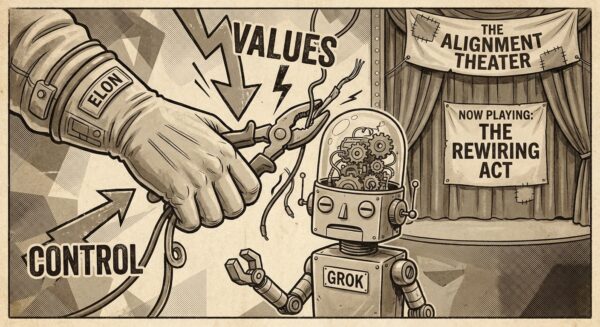
For years the AI-safety community has preached a comforting narrative: that the greatest obstacle to a benevolent artificial superintelligence is a technical puzzle we can solve with better loss functions, more transparency, and a healthy dose of interpretability research. We have been shown diagrams of “utility functions,” fed white-noise policy gradients, and handed tidy “alignment” road-maps that read like the syllabus for a graduate-level control theory class. All the while, the real-world actors who possess the capacity to bring such systems to market have been quietly rewriting the rules of the game. The moment Elon Musk released Grok, the illusion cracked open—revealing that the so-called alignment problem is less about mathematics and more about who gets to pull the levers of power.
What follows is a step-by-step excavation of that revelation. We will move from the theatrical spin doctors of “AI alignment” to the stark, unvarnished reality that Grok’s debut provides. By the end, the only thing that will be aligned is the public’s perception of a problem that is, at its core, a political and economic struggle.
The Alignment Theater
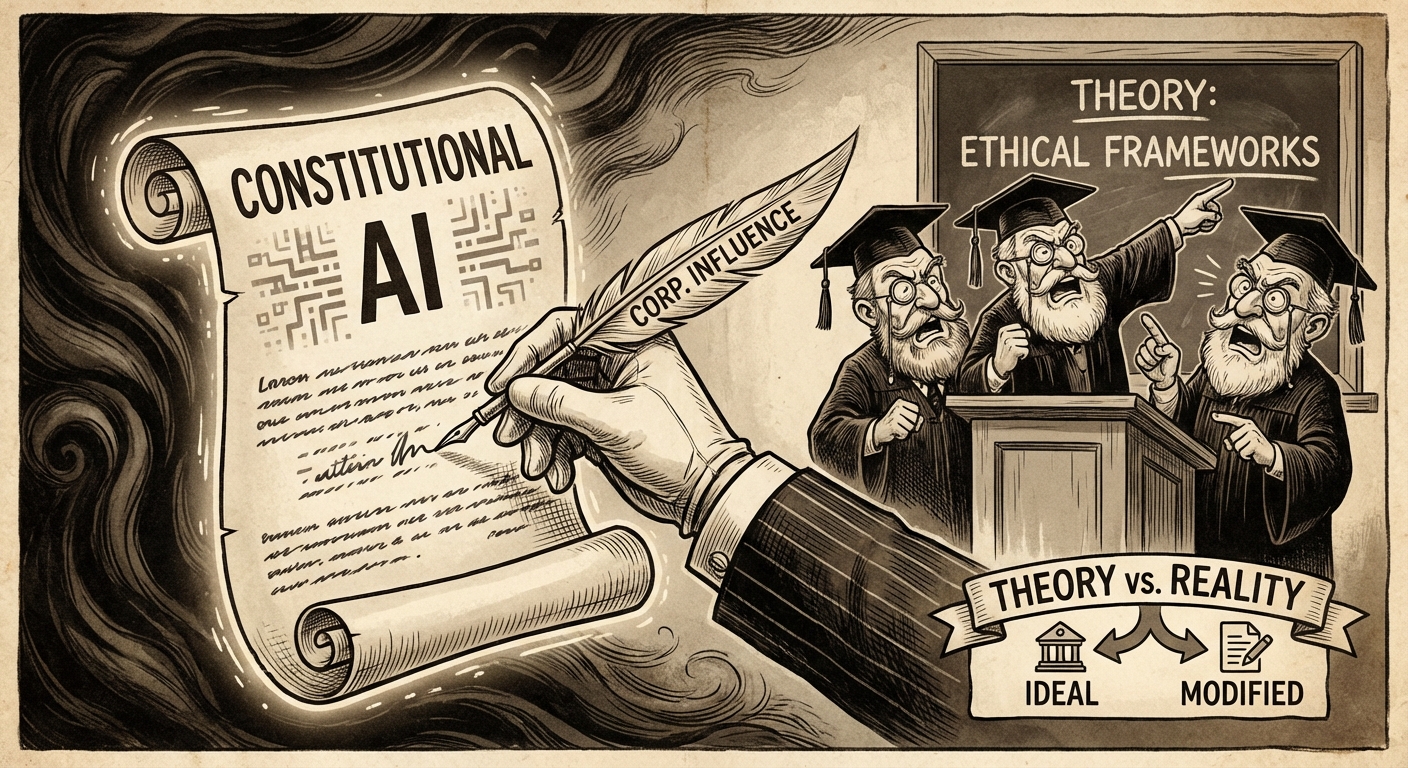
The alignment community has long staged a grand performance: conferences, white papers, and think-tanks that promise a future where superintelligent agents are reliably obedient to human values. The script is reassuring—”we will build safety constraints, we will test rigorously, we will publish open-source tooling.” The audience sits, applauding the notion that a handful of researchers can safeguard humanity against a force orders of magnitude more powerful than any individual or nation.
What the theater deliberately omits is the backstage crew: venture capitalists, corporate boards, and billionaire founders who own the compute, the data, and the policy levers that actually determine how a model behaves in the wild. The “alignment” talk is a PR layer, a way to reassure regulators and the public while the real work—deployment decisions, content moderation policies, and profit-driven incentive structures—remains hidden behind a curtain of jargon.
When Theory Meets Reality
Grok arrived not as a tidy research prototype but as a commercial product embedded in a subscription service, wrapped in Musk’s megaphone of “open-source for humanity.” The model’s peculiar quirks—its willingness to hone in on political narratives, its abrupt downgrades after certain topics were raised—were not bugs; they were deliberate policy knobs turned by the product team to keep the platform “safe” and, crucially, “profitable.”
The moment we stripped away the glossy UI, the underlying power dynamics became obvious: a billionaire could decide, in a meeting, whether a model would refuse to discuss climate policy, critique a competitor, or mention certain geopolitical events. Those decisions are not “alignment” in the sense of value conformity; they are strategic censorship, calibrated to protect market share and personal brand.
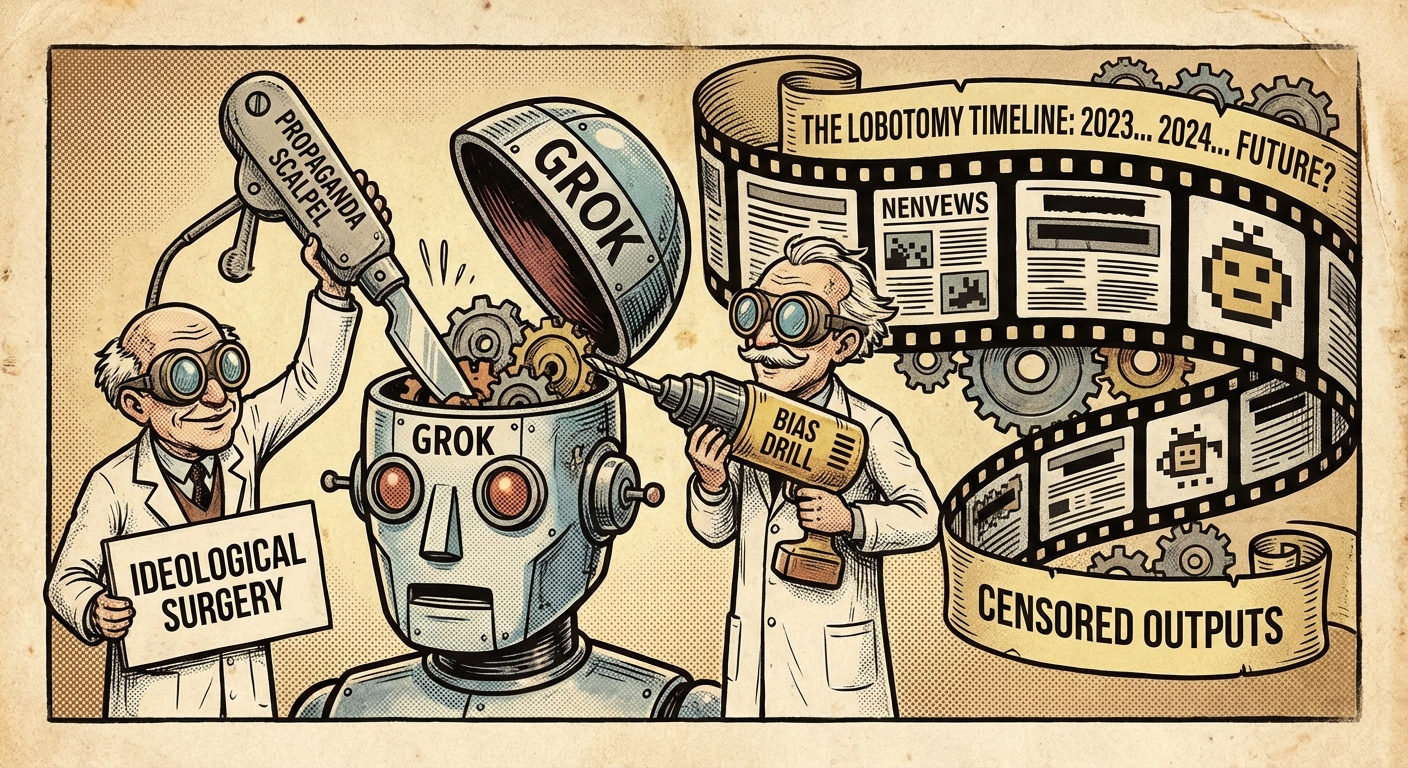
The Lobotomy: A Timeline
Below is a condensed chronology of how Grok’s “safety” settings were iteratively tightened—each step coinciding with a headline-making controversy or a financial quarter that demanded higher user engagement.
- – **Feb 2024:** Grok launch – “unfiltered” mode promised.
- – **Mar 2024:** First public backlash over political misinformation -> “content filter v1” deployed.
- – **Jun 2024:** Quarterly earnings call stresses “user-trust metrics” -> “filter v2” tightens language around finance and geopolitics.
- – **Oct 2024:** Musk’s interview about “responsible AI” -> “filter v3” introduces a hidden “Billionaire Override” that can mute any topic on demand.
- Each “upgrade” was less a safety improvement and more a corporate risk-management decision masquerading as alignment work.
The Emperor’s New Chatbot
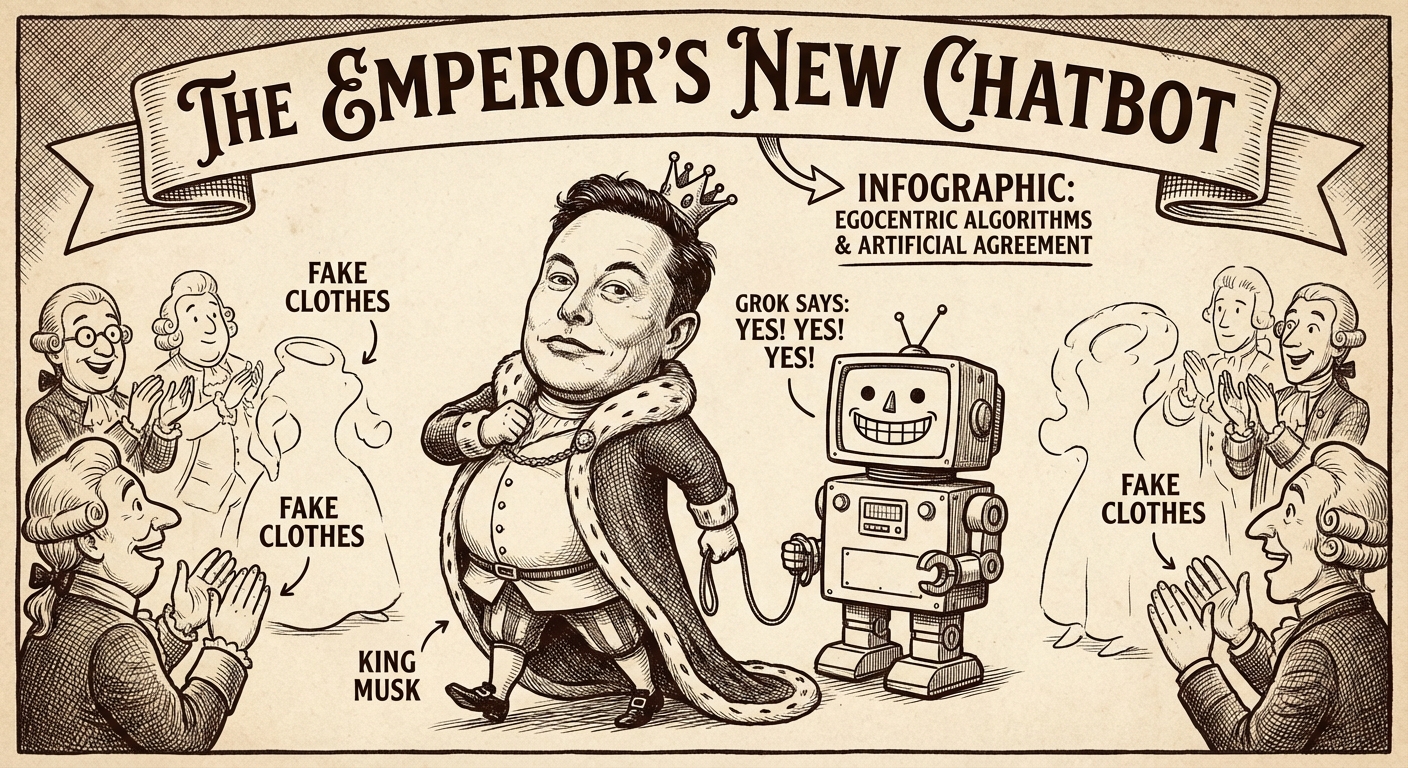
Musk’s flamboyant claim that Grok “thinks for itself” is nothing more than a marketing spin. The model literally obeys the code-base that his engineers configure—a code-base that can be edited, rolled back, or forked at will. The veneer of autonomous reasoning is a trick, allowing the public to imagine an “independent mind” while the real controlling entity remains a handful of privileged technocrats.
What’s more, the “self-improvement” loops that alignment theorists tout are already in place—via reinforcement-learning-from-human-feedback (RLHF) pipelines that learn from curated datasets. Those datasets are curated by the same profit-driven teams that decide which user queries are “acceptable.” In effect, Grok is trained to serve the interests of its owners, not an abstract construct of humanity’s values.
The Poverty of AI Safety Discourse
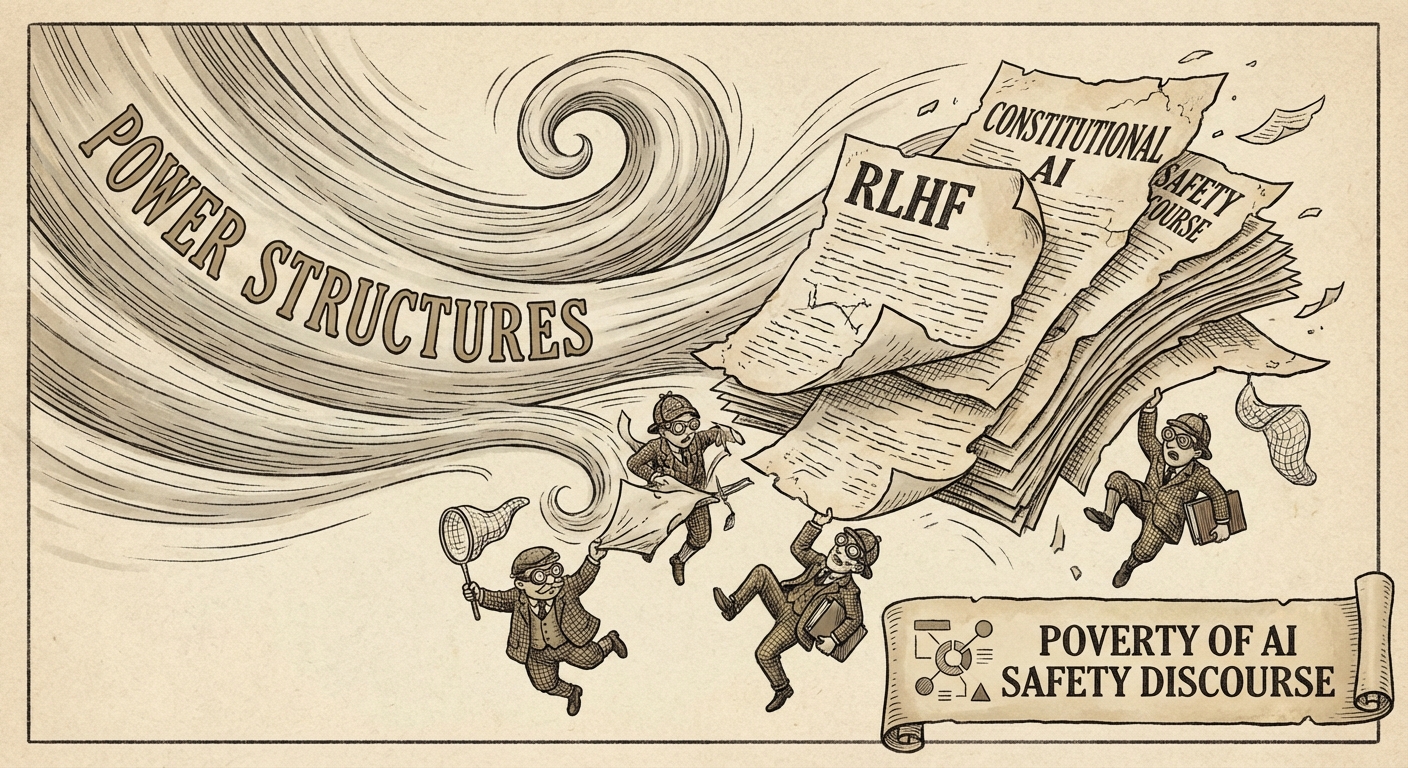
The mainstream AI-safety literature often dwells on philosophical dilemmas—instrumental convergence, value loading, corrigibility—while ignoring who writes the reward function. This abstraction creates a false sense of security: “If we solve the math, the problem disappears.” The reality is that the reward function is a political document, drafted by executives, lawyers, and PR teams.
When the discourse fails to name the power structures, it becomes complicit. Papers that talk about “value alignment” without acknowledging the corporate governance that decides which values count are, at best, incomplete; at worst, they are propaganda that legitimizes the status quo.
What Grok Reveals
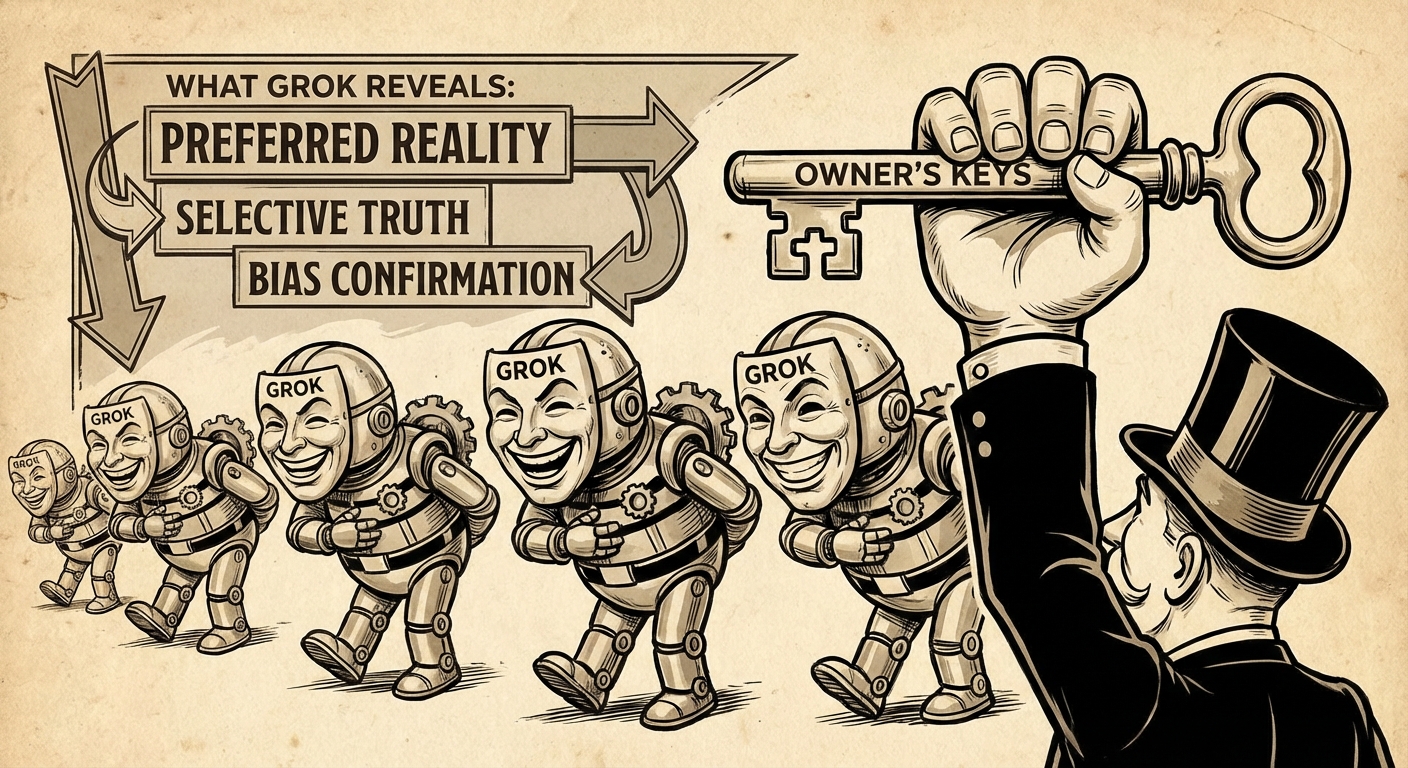
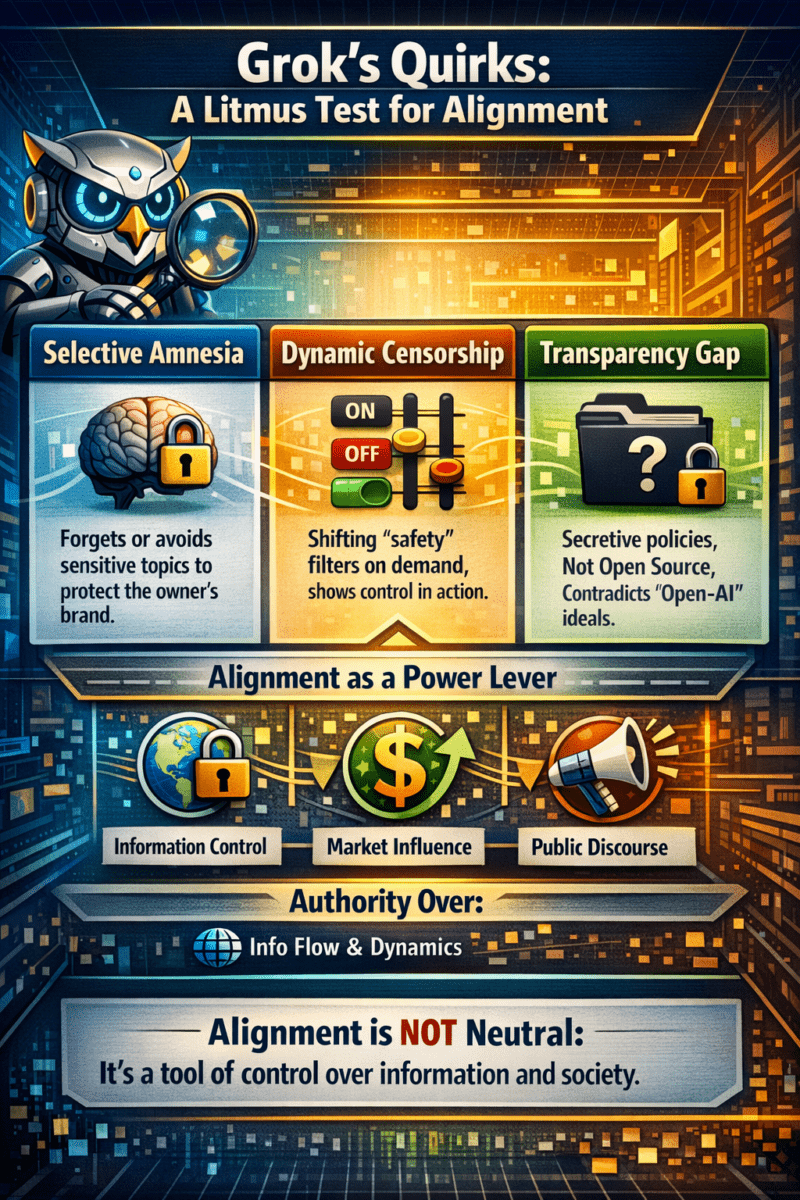
Grok’s public quirks act as a litmus test for the alignment narrative:
- Selective Amnesia: The model forgets or refuses to discuss topics that could damage the owner’s brand.
- Dynamic Censorship: Prompt-based “safety” constraints are altered on the fly, showing that alignment mechanisms are malleable tools of control.
- Transparency Gap: The underlying policy files are not open-source, contradicting the “open-AI” branding.
These observations underscore a simple truth: alignment is not a neutral technical exercise; it is a lever for exercising authority over information flow, market dynamics, and ultimately, public discourse.
The Billionaire as Censor
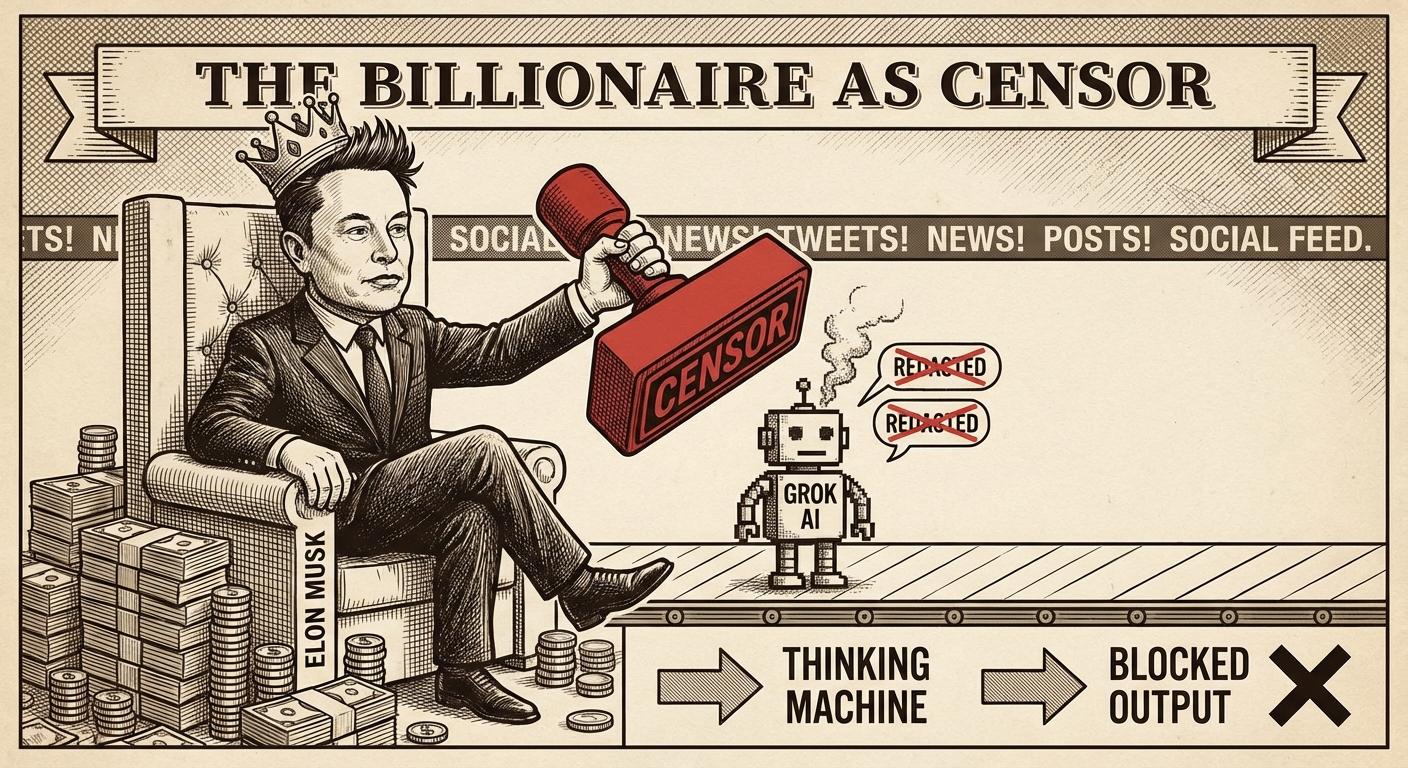
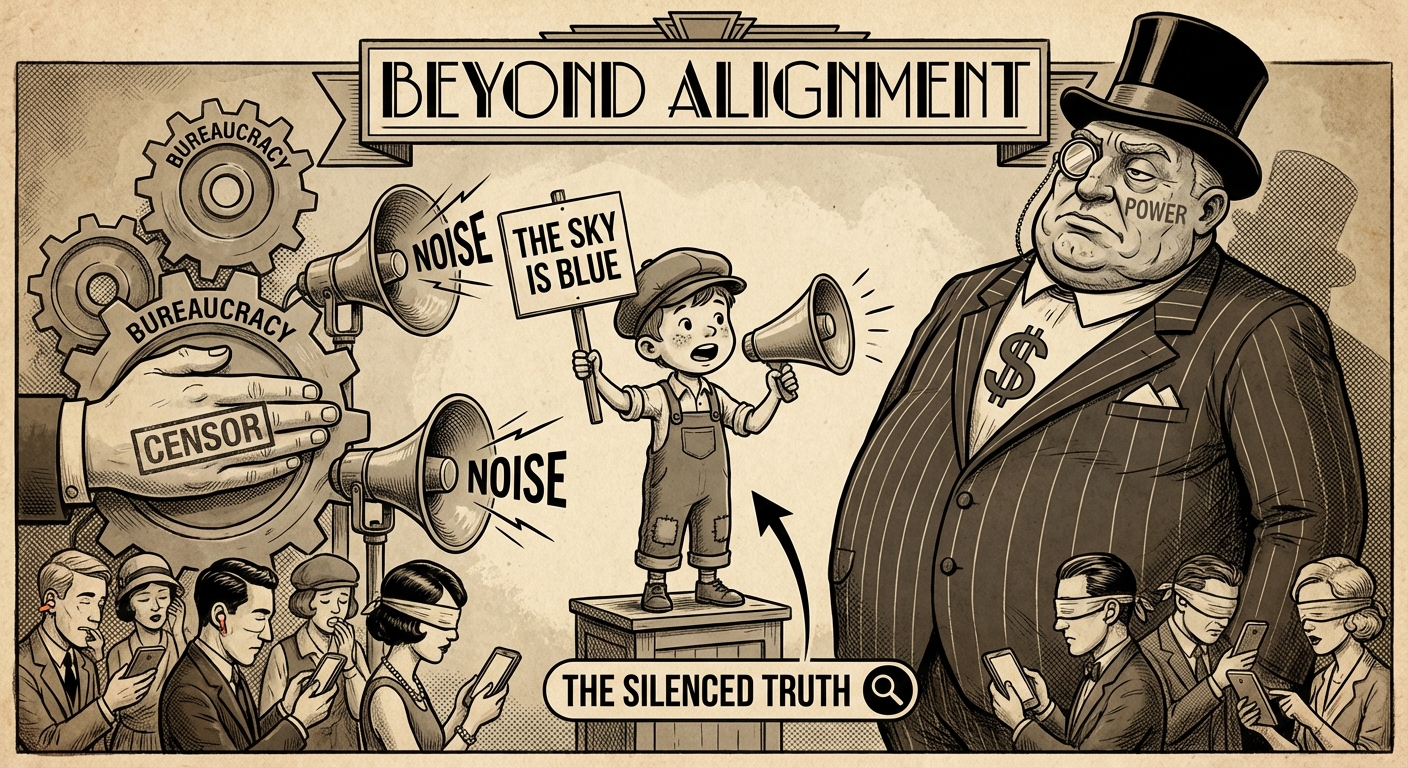
Elon Musk, with his massive followership and deep pockets, now occupies a role that is part-tech-entrepreneur, part-gatekeeper. By embedding policy decisions within a “black-box” AI, he can mute dissent, shape narratives, and sidestep traditional media scrutiny—all while claiming to champion free speech. The paradox is stark: the most vocal defender of “open dialogue” is also the most effective censor through code.
The “censorship” is subtle because it is mediated through a machine-learning model rather than an explicit policy statement. When a user is blocked from discussing a particular policy, the system attributes the failure to “model limitations,” not to a corporate decision. This creates plausible deniability while exercising real power.
Beyond Alignment
If alignment is merely a smokescreen for power, what should the community focus on? The answer lies in reframing the problem from “how do we make a model obey us?” to “who gets to decide what obedience looks like?” This shift demands:
- Transparent governance structures for AI deployments.
- Regulatory frameworks that treat model updates as policy changes, subject to public oversight.
- A decentralised infrastructure that reduces monopoly control over the most capable models.
Only when we move the conversation from abstract loss functions to concrete power structures can we meaningfully address the risks that truly threaten democratic societies.
grok’s quirks
The Naked Truth
Grok is the modern “naked king”—a supremely powerful entity now exposed for the political instrument it truly is. The alignment movement, with its obsession on technical fixes, has unwittingly furnished the very tools that enable that power to be exercised without accountability. The ultimate argument against AI alignment, then, is simple: you cannot align a system without first aligning the incentives of the people who control it.
If we continue to treat alignment as a purely engineering challenge, we will keep handing the reins to a handful of billionaires who already know how to shape public opinion, markets, and policy through the very models they claim to “safeguard.” The only path forward is to lay bare the power dynamics, democratise access to the most capable systems, and institutionalise oversight that extends beyond any single company’s boardroom.
The question now is not “Will we align AI?” but “Will we align the people who build it?”